




FLO Kolkata, under the leadership of Chairperson Mansi Agarwal, organized “Workplace Readiness & Livelihood Development Programme” at the Apni Kutir Skilling Centres during Q2 with the overarching objective of preparing 714 grassroots women for greater economic participation through an integrated combination of vocational training, creative skill development and workplace preparedness.
Rather than treating skill training as an isolated classroom intervention, the programme positioned every training module as part of a broader readiness-to-livelihood pathway. Participants were introduced to practical skills that could be learnt, practised and subsequently applied towards creating tangible products or exploring livelihood opportunities.
The programme encompassed a diverse range of training modules.
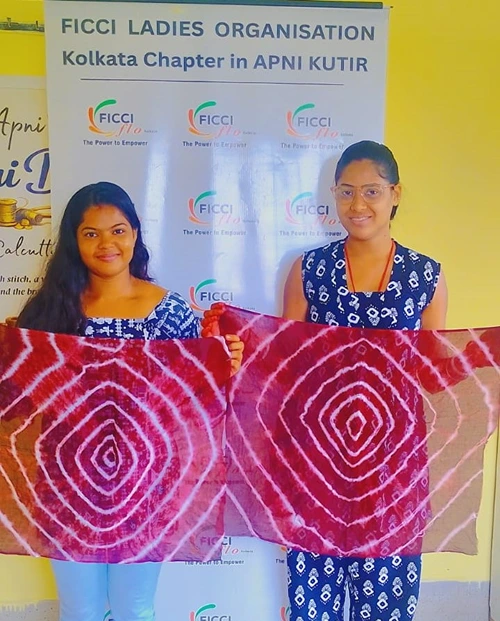
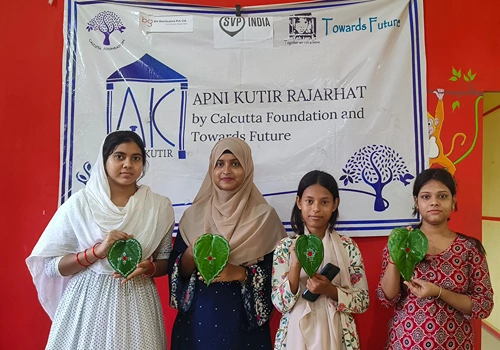
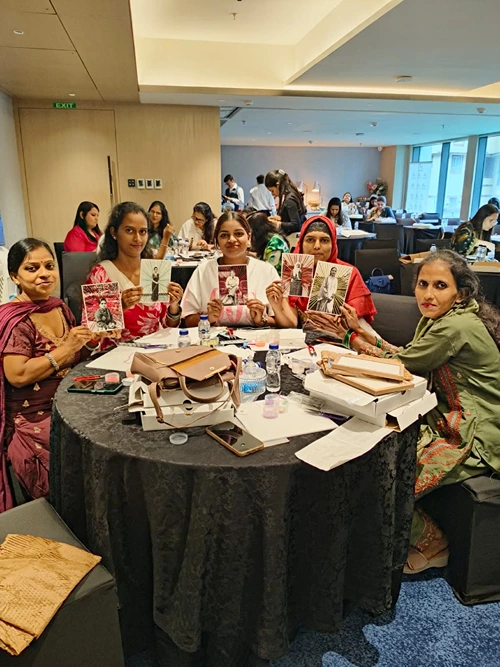
Rakhi Making introduced participants to handmade product creation using accessible materials and decorative techniques. Paan Pata Kolka and Kolka Workshops exposed participants to traditional decorative art, encouraging creativity, precision and craftsmanship. Baby Set Making enabled participants to apply sewing skills towards the creation of functional garments. Tie & Dye introduced textile-design techniques and colour application, while Photo Embroidery provided exposure to a specialised form of customised embroidery.
The Creative Upcycling module demonstrated how discarded materials could be transformed into useful and aesthetically appealing products, introducing participants to the principles of resourcefulness and value addition. Cake Baking further expanded the livelihood spectrum into food-based enterprise, providing practical exposure to baking and product preparation.
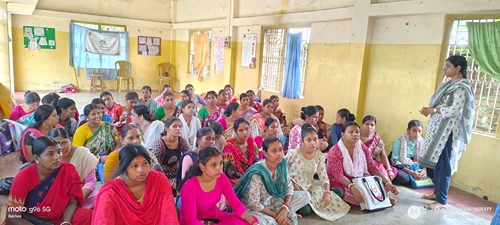
Crucially, these skill modules were accompanied by a Workplace Readiness component for the entire beneficiary cohort.
Participants were encouraged to develop the professional attributes required to enter, sustain and progress within a work environment, including confidence, communication, discipline, presentation, professional conduct and an understanding of workplace expectations. The programme therefore addressed both sides of livelihood preparedness: what a woman can do and how she can present, apply and build upon that capability. Practical training enabled participants to acquire and strengthen specific skills, while workplace-readiness inputs helped develop the confidence and professional orientation necessary to use those skills effectively.
The initiative also emphasised continued handholding and progressive development. Participants are being encouraged to refine their skills, improve the quality and presentation of their products and explore opportunities for employment, home-based work or small-scale self-employment. The larger impact lies in this integrated approach: enabling grassroots women to move from learning a skill to recognising its economic potential; from practising a skill to creating a product; and from acquiring capability to becoming more confident, prepared and market-oriented.