
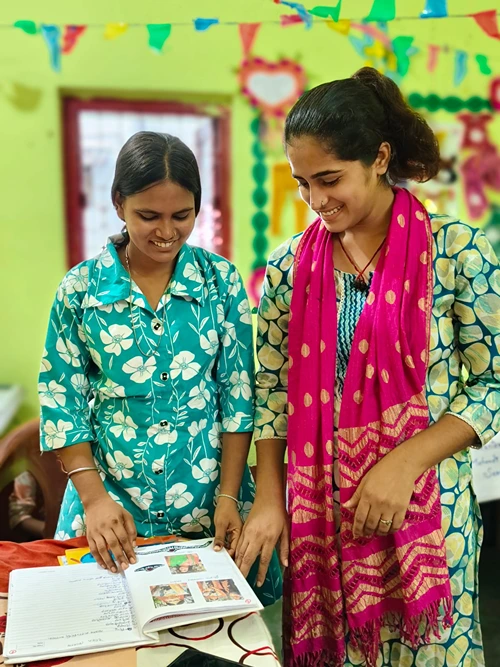
FLO Kolkata, under the leadership of Chairperson Mansi Agarwal, celebrated Youth Skills Day through a multi-centre Exhibition-cum-Sale initiative, bringing together learners and community participants across nine Apni Kutir centres in Bengal — Bansberia, Bardhaman, Baruipur, Behala, Chetla, Garia, Khardah, Kharagpur and Topsia. The programme adopted two complementary formats: skill competitions and exhibition-cum-sale activities.
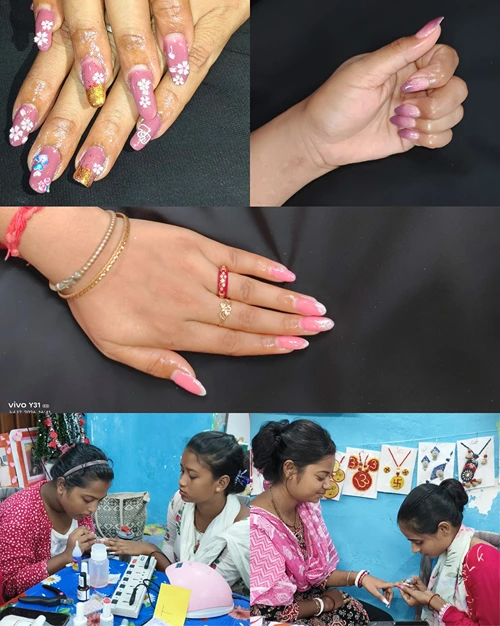
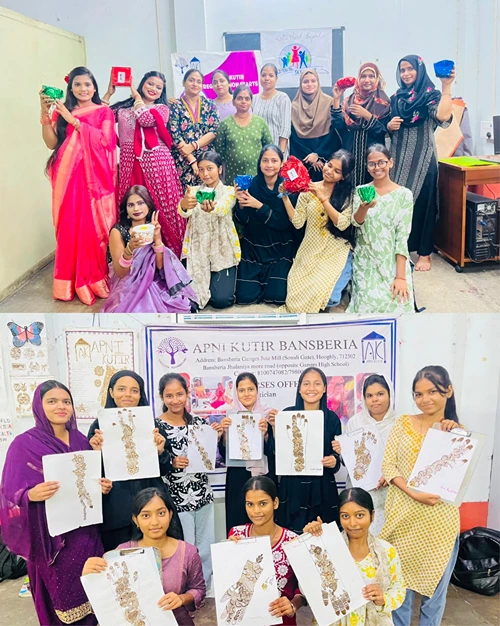
At Bansberia and Kharagpur, inter-student competitions were conducted across Sewing, Computer, Mehendi and Beautician disciplines. Sewing students were required to complete a top or frock within a stipulated timeframe; Computer students were assessed on typing speed and accuracy; Mehendi students reproduced an on-the-spot design within the allotted time; and Beautician students demonstrated grooming skills on models under a defined time limit.
These activities created an environment where students had to translate their classroom learning into speed, precision, creativity, and confident execution. The top three performers in each course were recognised with medals and gifts, providing formal acknowledgement of their performance and reinforcing the value of skill excellence. At Bardhaman, Baruipur, Behala, Chetla, Garia, Khardah and Topsia, the initiative took the form of exhibition-cum-sale events.
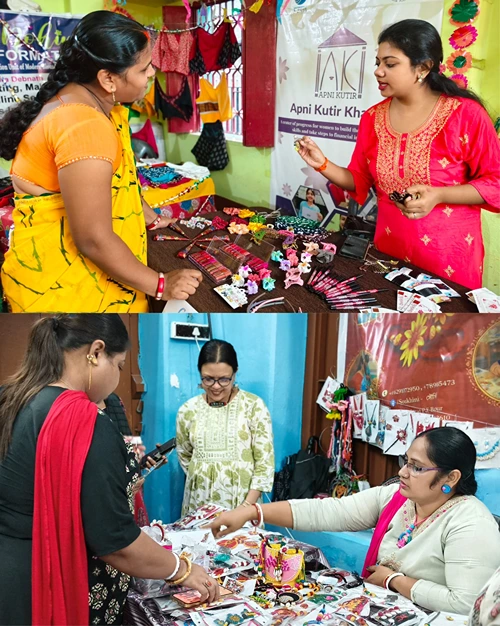
Participants showcased and sold products and services developed through their vocational training, including kurtis, blouses, nighties and other garments; crochet and handmade craft products; live Mehendi application; threading, facials and hot-oil massage services; jewellery; and food products. The significance of the initiative extended beyond product display.
Participants were provided with an opportunity to interact directly with customers, present their work, understand market response, and experience the process of converting acquired skills into economic value. This created an important bridge between vocational education and practical livelihood development. Most significantly, the exhibition-cum-sale generated more than ₹41,000 in collective income across the participating centres.
This tangible economic outcome demonstrated the livelihood potential embedded within vocational capabilities when training is complemented by market exposure and opportunities for direct selling. The earnings provided participants with an immediate experience of how their skills could translate into financial value, while reinforcing the relevance of product quality, presentation and customer engagement.
The initiative consequently moved beyond conventional skill demonstration to create a skill-to-market-to-income continuum—enabling learners to test their capabilities, showcase their work, engage with customers, and experience the economic potential of their training. The initiative reached approximately 1,000 beneficiaries and created a meaningful platform for participants to demonstrate the practical and economic relevance of their vocational training.