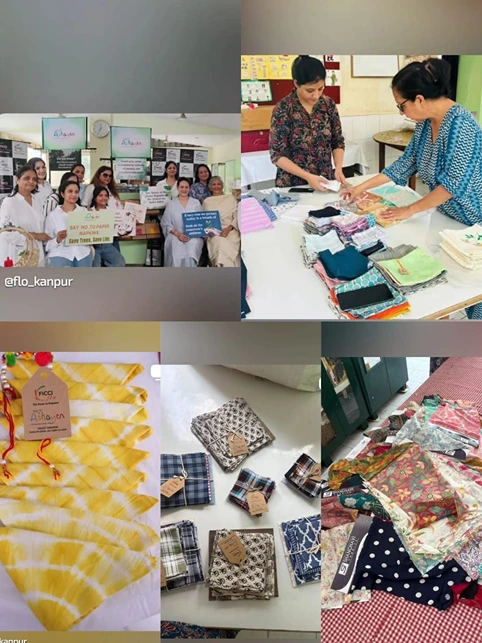
Project Sanvaran is a sustainability initiative undertaken by FICCI FLO, Kanpur Chapter, with the vision of encouraging environmentally responsible habits through simple and practical changes in everyday life. Launched in April 2026, the project focuses on reducing the use of single-use paper napkins by introducing reusable cloth napkins as a sustainable and convenient alternative.
The initiative was developed with the understanding that small lifestyle changes, when adopted collectively, can create meaningful environmental impact. Reusable cloth napkins can be washed and used multiple times, helping reduce dependence on disposable paper products and consequently minimising paper waste. Through Project Sanvaran, the team aims to make sustainability accessible and easy to incorporate into households, workplaces, social gatherings, and daily routines.
Since its inception, the project has received encouraging support from FLO members. The reusable cloth napkins were introduced at FLO Bazaar, where they were successfully sold out during the initial launch. The strong response demonstrated the community’s interest in sustainable and reusable alternatives. The napkins were subsequently sold out again at FLO Bazaar in July 2026, reflecting continued demand and acceptance of the initiative. Following this response, production was resumed to meet the growing requirement.
A significant milestone achieved by Project Sanvaran is the production of approximately 10,000 reusable cloth napkins to date. This achievement reflects the collective efforts of the Project Heads, Bharti Garg and Namrata Garg, along with numerous FLO Kanpur members who have actively supported and promoted the initiative. One of the key challenges encountered during implementation was sourcing sufficient quantities of suitable cotton cloth. The team approached various boutiques and cloth shops to identify reliable sources and ensure continuity of production.
Project Sanvaran aims to progress towards the larger goal of eliminating the use of paper napkins wherever practical and building long-term sustainable habits within the community. By encouraging conscious consumption today, the initiative seeks to contribute towards a cleaner environment and a healthier, more sustainable future for the next generation.