
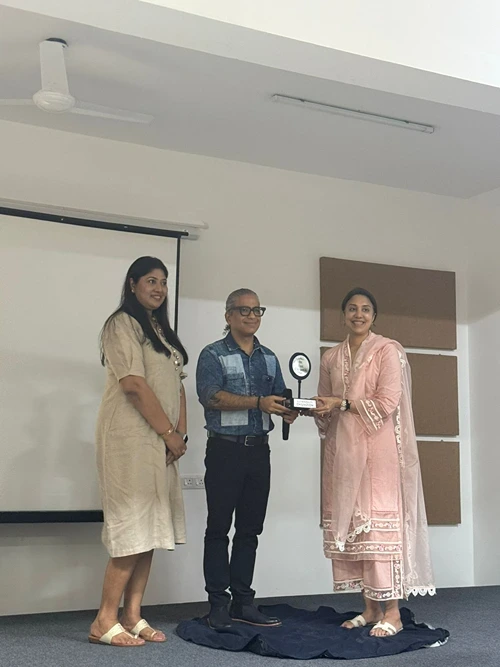

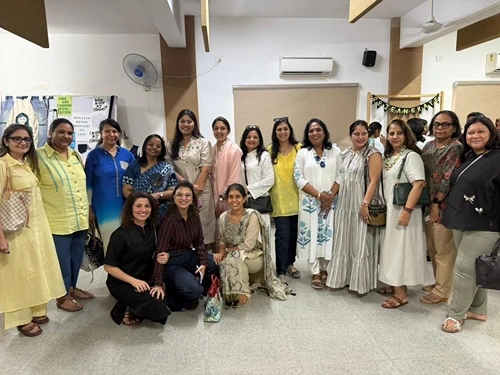
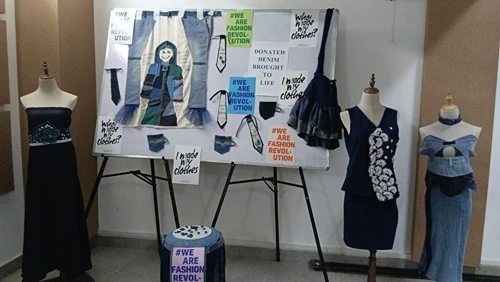
FLO Chennai, under the leadership of Chairperson Dr. Amulya Rao, organized “Project Rejeanerate” at Lady Andal School- FIDA. It was an engaging and impactful showcase of sustainable innovation, centered around the concept of transforming discarded denim into functional, purpose-driven products. The initiative followed a circular approach comprising collection, conversion, and distribution, thereby demonstrating a complete lifecycle of sustainable design.
The event began with an overview of the denim collection drive, where post-consumer jeans were sourced through multiple channels, including retail partners and collection points. These materials were then upcycled into a diverse range of products by students, in collaboration with self-help groups and social organizations.
A key highlight of the event was the presentation of innovative student designs from the FIDA School of Design. The “LUMIX – See Light, Be Safe” backpack addressed both environmental and safety concerns by replacing polyester bags with denim alternatives and incorporating reflective elements for enhanced visibility. The “Get Go Jacket” offered a functional solution for women by integrating hidden pockets for everyday essentials, combining style with practicality.
Another noteworthy concept was the “Secret Seater,” a dual-purpose bag that transforms into a seating surface, designed with hygiene and mobility in mind. Students also presented utility-based designs such as multi-tool storage solutions for designers and sustainable alternatives like denim dog leashes. Each product reflected thoughtful problem-solving and a strong commitment to sustainability.
The event further highlighted the project’s alignment with multiple Sustainable Development Goals, including responsible consumption, climate action, and partnerships for impact. A case study presentation showcased measurable outcomes, including the number of jeans repurposed, school kits created, and carbon emissions reduced.
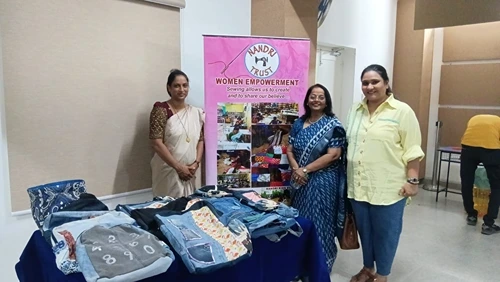
The project was supported by industry and social collaborators, including Derby Jeans, which contributed a significant volume of denim for upcycling. Organizations such as Nandri Trust enabled production through women-led initiatives, while partners like Arbeser supported sustainable design practices. NGOs facilitated distribution and extended the project’s community impact.
Around 3,200+ post-consumer jeans were repurposed; 579 upcycled school kits were created; 11 public schools were impacted; 100.2 tons of CO₂ emissions were reduced; and 1,500 kg of post-consumer denim were utilized. Overall, Project Rejeanerate successfully demonstrated how design innovation, when combined with sustainability and community collaboration, can create meaningful and scalable impact.