
FLO Kolkata, under the leadership of Chairperson Ms. Mansi Agarwal, conducted two closely aligned Traditional Design workshops at its Apni Kutir centres in Diamond Harbour and Rajarhat, bringing together 92 students for an immersive exploration of Kolka and Paan Pata decorative art.
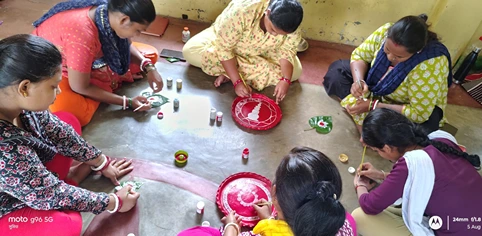
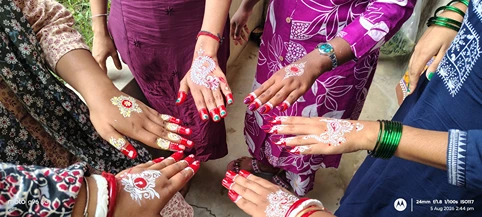
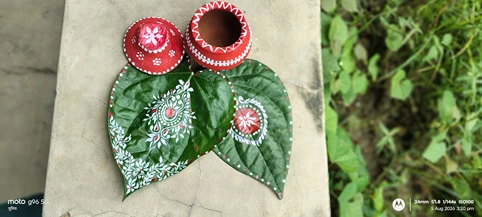
The first workshop was held at AK Diamond Harbour on 5 August 2026, with 40 students participating. Facilitated by Pinky Baidya, Beauty Trainer, the session introduced participants to the traditional art of creating Kolka designs using matir sora, paan leaves and hand designs. Fabric colours were used to develop the decorative compositions, giving participants an opportunity to explore colour, form and pattern through practical artistic work.
The facilitator demonstrated each technique progressively, enabling students to observe the process before applying it themselves. Participants experimented with decorative designs and completed their own artwork, developing greater confidence in translating an idea into a finished creative piece. The hands-on format encouraged patience, precision, concentration and independent application.
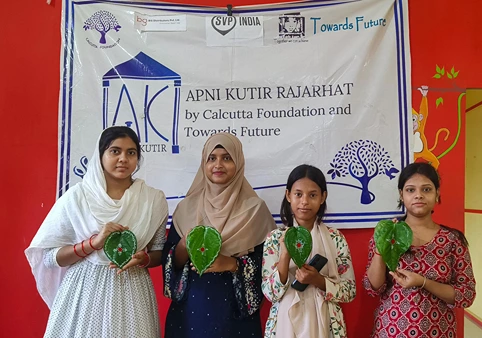
The second workshop took place at Apni Kutir Rajarhat on 13 August 2026, engaging 52 students. Conducted by Sangita Paul, Mehendi Trainer, the session focused specifically on Paan Pata Kolka, using the betel leaf as the artistic canvas. The facilitator began with a live demonstration, creating a red circular motif at the centre of the leaf and subsequently developing an intricate decorative pattern around and within it using a white pen.
Following the demonstration, every student practised the technique on an individual betel leaf under the facilitator’s guidance. The process created an animated and collaborative learning environment, with students enthusiastically experimenting with the design, completing their individual artworks and sharing their creations.
Across both workshops, the emphasis remained on learning through participation. Rather than simply observing a traditional art form, students were encouraged to understand the technique, practise it, interpret it creatively and complete an artwork of their own. The workshops demonstrated how traditional creative practices can contribute meaningfully to life-skill development.
The discipline required for intricate design encouraged attention to detail, patience, concentration and perseverance, while completing an individual artwork strengthened creative confidence and self-expression. By bringing traditional artistic techniques into the Apni Kutir learning environment, the initiative created an opportunity for students to engage with cultural art forms in a contemporary, accessible and experiential manner. It also introduced creative skills that may be further refined and potentially explored as avenues for decorative craft and income generation.