
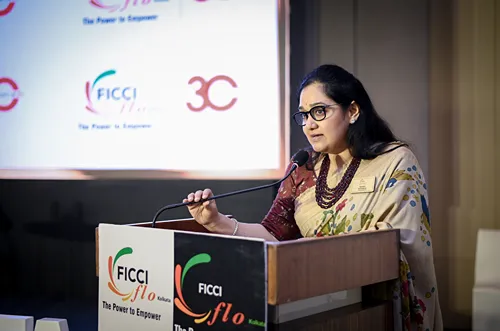
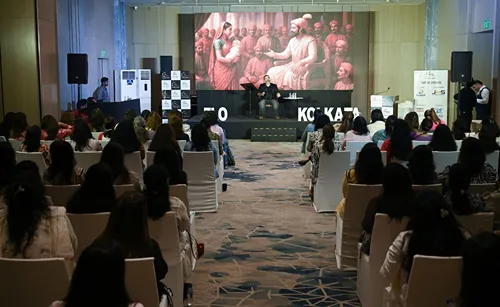
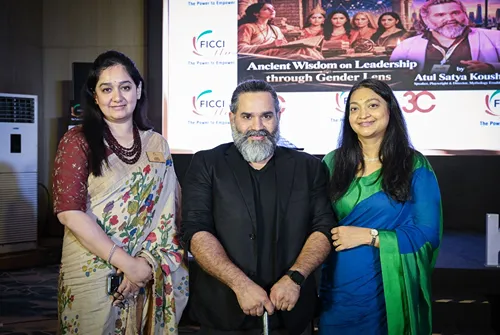
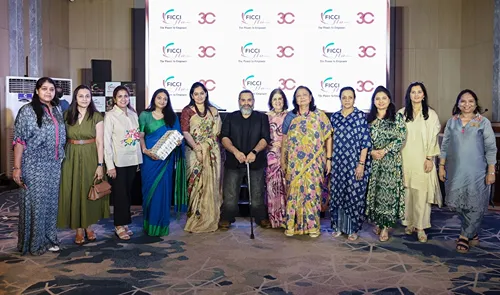

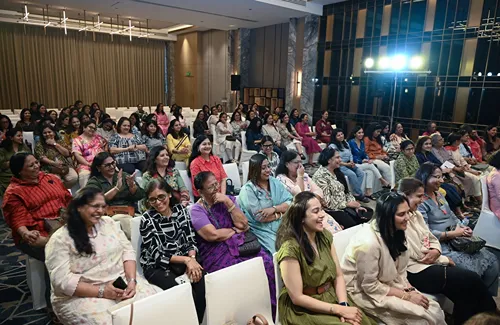
FLO Kolkata, under the leadership of Chairperson Mansi Agarwal, hosted “Leadership Lessons from Ancient Wisdom, with a Gender Lens,” a session that used storytelling to revisit Indian mythology not as distant history, but as a body of experiences through which contemporary behaviour and choices can be examined. One of the opening ideas was the distinction between knowledge and wisdom.
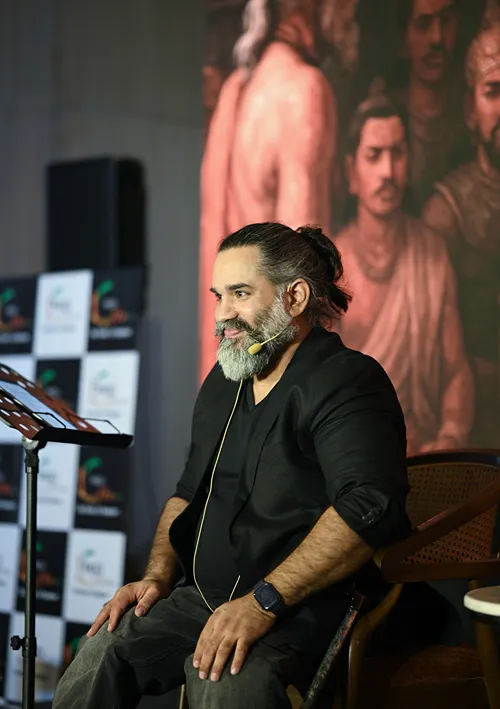
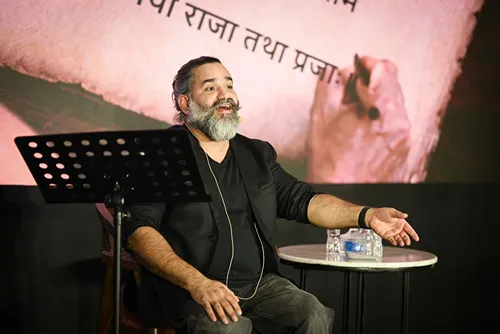
The enlightening session featured Mr. Atul Satya Koushik, an international speaker, mythology integrator, playwright and director, known for interpreting Indian mythology through the lens of contemporary life. A Chartered Accountant and lawyer by qualification, Mr. Koushik brought together mythology, storytelling and contemporary reflection to examine leadership, emotional intelligence, decision-making, women’s agency and relationships.
Hosted under FLO Kolkata’s Life Skills and Mental Health initiatives, the speaker illustrated that knowing a fact does not automatically mean knowing how to apply it. Wisdom, therefore, lies in judgement—particularly when circumstances are complicated, and there is no prescribed answer. The discussion then moved to self-leadership. Before taking responsibility for others, an individual must first learn to understand and direct oneself. This was followed by a strong emphasis on the importance of questioning.
The example of Gargi, one of India’s celebrated women scholars, illustrated the courage required to question, think independently, and pursue understanding. The speaker cautioned against allowing ego, lack of confidence, or peer pressure to inhibit intellectual enquiry.
Several stories were then used to explore the relationship between emotion and action. Rather than treating emotion as something that weakens decision-making, the speaker presented it as a force that can be channelled constructively.
The story associated with Chhatrapati Shivaji illustrated how an emotionally charged situation could lead to purposeful action when converted into a plan. Participants were also reminded that experiences of abhaar and apmaan can become powerful drivers of decisions, provided they are handled consciously. The gender lens became particularly pronounced when the conversation turned to women’s agency. The speaker questioned the tendency to celebrate women symbolically while leaving decision-making structures unchanged.
The focus, he emphasised, should be on creating a meaningful place for women at the decision-making table. Narratives surrounding Kaikeyi opened a discussion on foresight, sacrifice, and the consequences of choices, while another strand of the conversation addressed the pressure on women to conform to prescribed standards of appearance. Participants were encouraged to value themselves without allowing external definitions of beauty to determine their worth.
The session also explored relationship management through the example of Draupadi and her relationships with the five Pandavas. The central lesson was to understand before expecting to be understood, while recognising that different relationships require different forms of engagement. The discussion subsequently moved towards Kunti and the responsibility of enabling others to grow, speak and eventually assume leadership. Through stories from the Ramayana, Mahabharata and other Indian traditions, the programme encouraged participants to examine how ancient perspectives on human behaviour, relationships, choices and consequences can inform the way we navigate modern life.
Key Takeaways
- Lead yourself before you lead others: The foundation of leadership is the ability to govern one’s own choices, reactions, and conduct.
- Do not let ego stand between you and learning: Being questioned is not a threat to authority; it is an opportunity to examine, rethink, and grow.
- Question boldly, but seek answers responsibly: The example of Gargi reinforced that intellectual courage lies not merely in asking questions, but in the pursuit of deeper understanding.
- Turn emotion into strategy: Emotion need not weaken decision-making; when understood and channelled effectively, it can become the starting point for a powerful plan of action.
- Never surrender your atma-samman: Self-respect must remain an internal anchor, rather than something granted or withdrawn by society, relationships or external approval.
- Women need a seat where decisions are made: Empowerment is not about placing women on a pedestal; it is about ensuring their voice, agency and judgement have real influence.
- Do not confuse sacrifice with the absence of agency: Stories such as that of Kaikeyi invite a deeper examination of women’s choices, foresight and the consequences behind seemingly simple acts of sacrifice.
- Pause before turning emotion into commitment: The principle “Never promise when you are happy” highlights the wisdom of creating distance between heightened emotion and consequential decisions.
- Understand before expecting to be understood: The example of Draupadi and her relationships demonstrated that effective relationship management requires empathy, perspective, and an understanding of individual needs.
- A leader’s success lies in creating the next leader: Like the lesson drawn from Kunti, leadership is also about giving others space to speak, preparing them to take responsibility, and knowing when to pass on the baton.
Impact & Outcome
Around 150 women participated in this inspiring and mind-awakening session. From a Life Skills perspective, the session focused on self-leadership, decision-making, relationship management, intellectual confidence, and the ability to respond thoughtfully to challenging situations. From a Mental Health perspective, it explored emotional awareness, self-worth, emotional regulation and the importance of creating space between an emotional experience and one’s subsequent action.
The gender lens was integral to the discussion. The session sought to encourage women to question inherited expectations, recognise their agency, preserve their atma-samman, and participate meaningfully in decision-making spaces.