
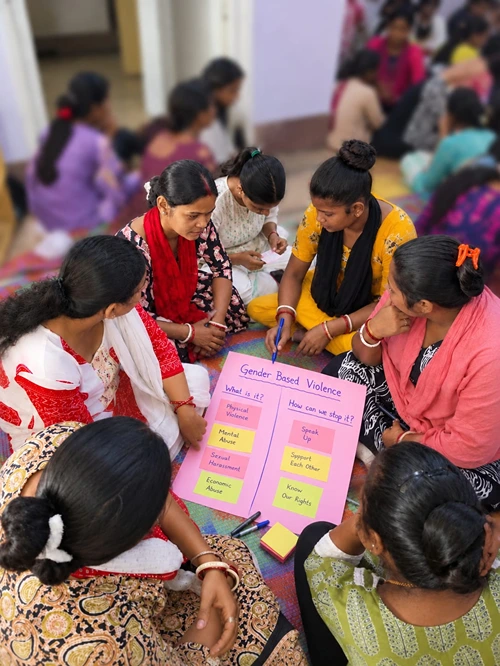
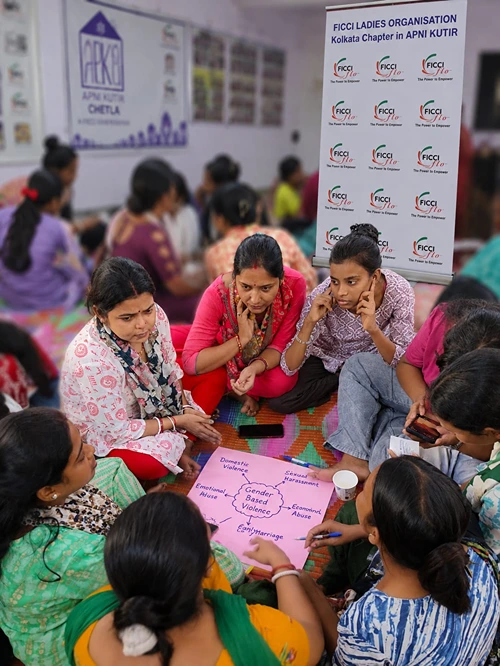

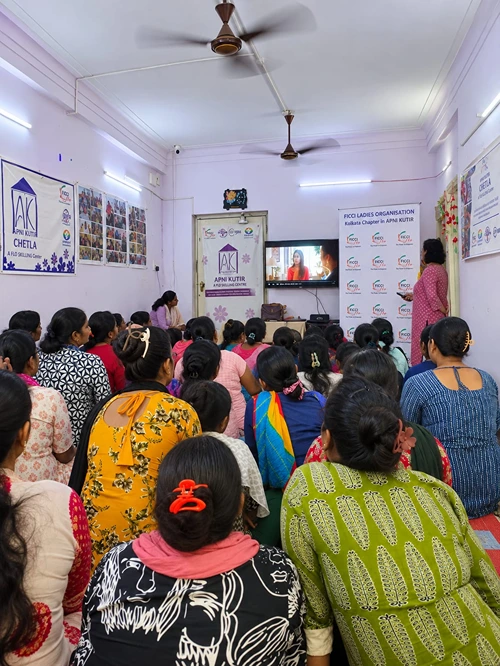
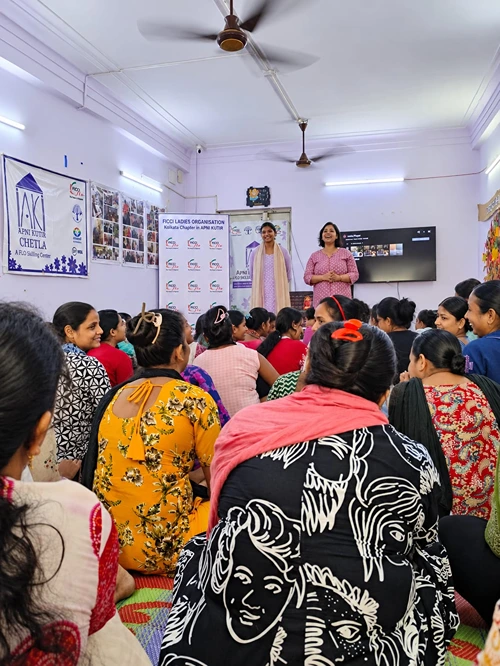
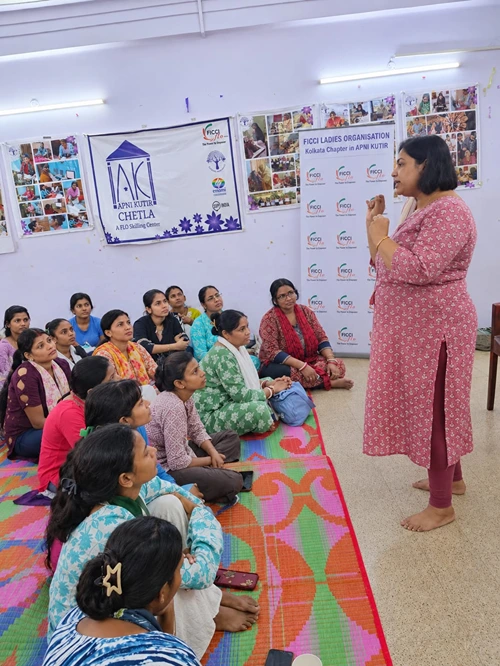
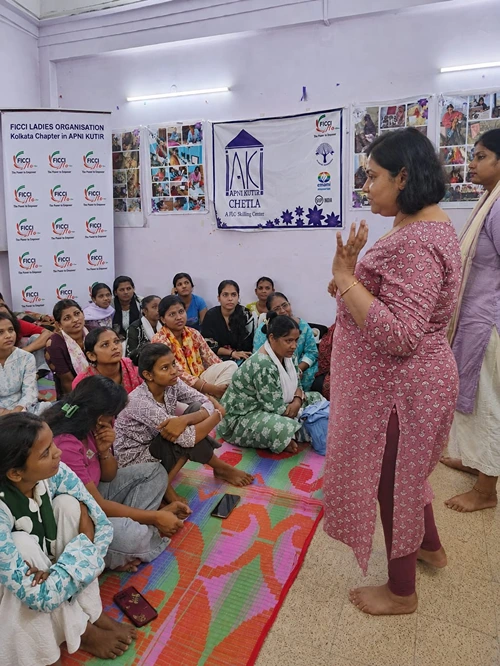
FLO Kolkata conducted “Gender-Based Violence: Understanding Violence and Legal Awareness” at AK Chetla on 29 September 2026, with 60 participants, as part of a progressive gender-sensitisation and legal-awareness series facilitated by SWAYAM. The intervention has been deliberately structured as a multi-session learning journey, recognising that gender-based violence and the legal framework surrounding women’s rights are both sensitive and extensive subjects that require sustained engagement.
Rather than attempting to address every legal provision within one session, the series is designed to progressively build participants’ understanding—from foundational concepts of gender to recognition of violence and, subsequently, awareness of legal rights, protections and avenues for support and redressal. The first session focused on establishing a basic understanding of sex, gender and gender sensitisation.
The present session built upon that foundation and shifted the focus towards gender-based violence, enabling participants to understand its different forms and recognise situations and behaviours that may constitute violence or abuse. The session encouraged participants to look at gender-based violence through an awareness-oriented lens, helping establish the understanding that violence may manifest in different forms and that recognising it is an important step towards seeking appropriate support.
Alongside this core discussion, participants received a brief introduction to relevant legal provisions concerning women’s rights and protection. These included the Protection of Women from Domestic Violence Act, 2005 (PWDVA); Dowry Prohibition Act, 1961; Prohibition of Child Marriage Act, 2006; Sexual Harassment of Women at Workplace (Prevention, Prohibition and Redressal) Act, 2013 (POSH Act); and property and succession-related laws concerning women’s rights.
The legal provisions were intentionally introduced only at a foundational level, allowing the primary focus of the session to remain on understanding gender-based violence and recognising its manifestations. This approach also established a clear continuum for the forthcoming sessions, where the individual legal provisions will be taken up in greater detail.
The upcoming sessions are intended to progressively strengthen participants’ understanding of their legal rights, the protections available to them and the mechanisms through which they may seek support and redressal.
This phased methodology allows participants to absorb complex and sensitive information progressively rather than encountering an extensive body of legislation in a single intervention.
The session concluded with an interactive discussion, providing participants with an opportunity to share their understanding and raise questions. The engagement helped create a constructive learning environment around a sensitive subject and established a meaningful foundation for continued gender and legal awareness.
With 60 participants engaged, the session contributed to strengthening grassroots awareness of gender-based violence while establishing a structured pathway towards deeper legal literacy and greater awareness of women’s rights and protections.