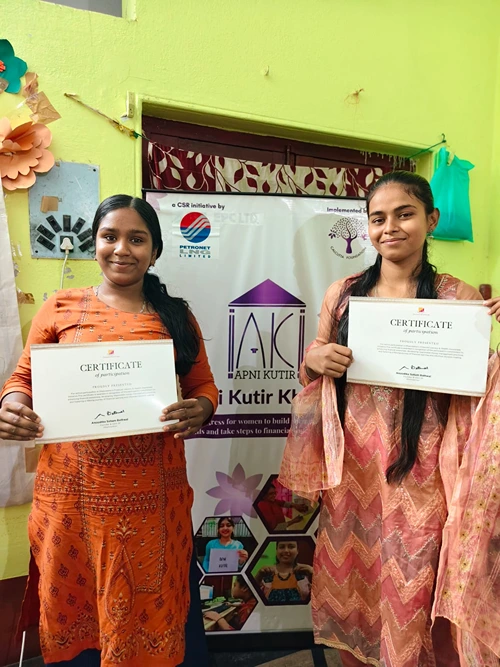
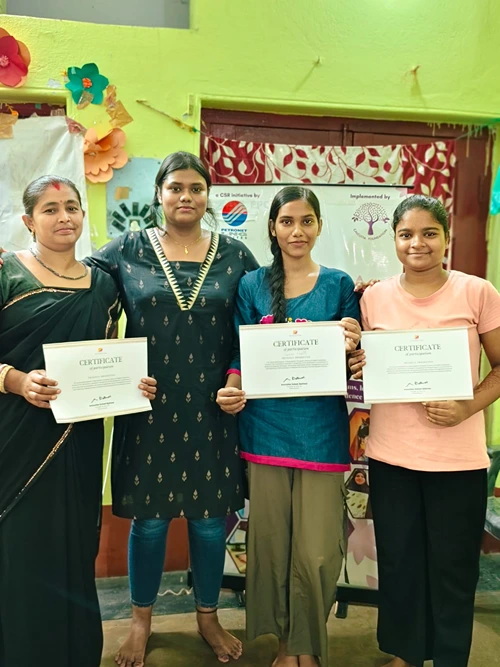

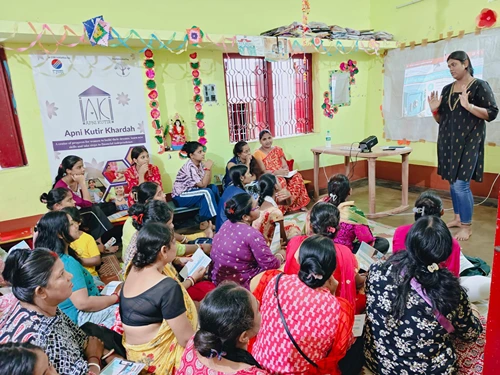
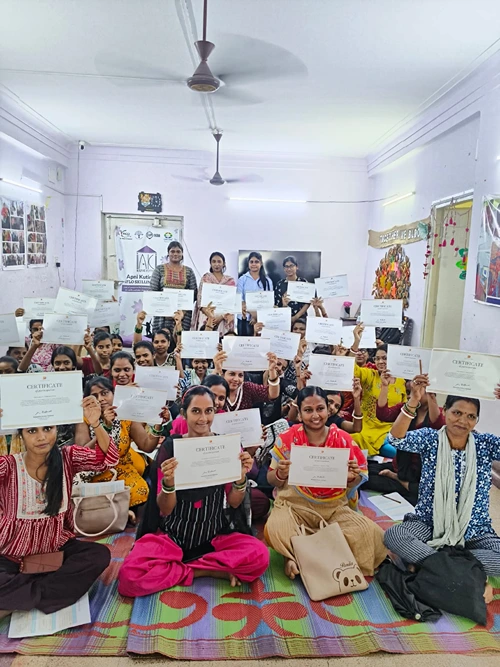
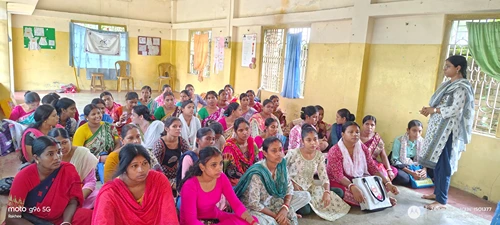
FLO Kolkata, under the leadership of Chairperson Ms. Mansi Agarwal, conducted a “Financial Literacy & Wealth Awareness Session,” across various Apni Kutir centres, in collaboration with Dhanvesttor, reaching 350 participants through two structured sessions. The intervention was designed to translate financial awareness into practical understanding, enabling community women to approach money management, saving and financial planning with greater confidence and foresight.
The session addressed the increasingly important role of financial knowledge in strengthening women’s economic agency. Participants were introduced to the fundamentals of financial planning, responsible money management and disciplined saving, with the discussions framed in a simple and accessible manner. The objective was not merely to impart financial terminology, but to help participants understand how everyday financial choices can influence household stability, personal preparedness and longer-term financial security.
The two-part format enabled the facilitators to approach financial management progressively. Participants were encouraged to reflect on the importance of developing saving habits and making financial decisions with greater deliberation. The sessions also emphasised the value of planning ahead, helping participants recognise that financial security is strengthened through consistent and informed choices rather than short-term responses to immediate needs.
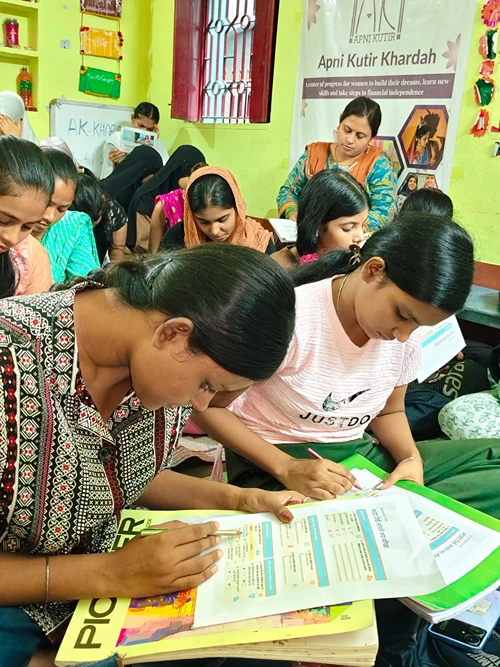
A particularly valuable aspect of the intervention was its interactive character.
Participants actively listened to the facilitators, engaged in discussions and raised questions relating to their financial concerns. This created an environment in which financial literacy became a participatory learning experience rather than a one-directional lecture.
The session also sought to strengthen participants’ confidence in discussing and managing financial matters. Greater familiarity with basic financial concepts can enable women to participate more meaningfully in household financial decisions, develop personal saving practices and approach future financial choices with improved clarity.
The initiative carried a strong economic empowerment dimension. Financially informed individuals are better positioned to assess their priorities, organise their resources and plan for future requirements. For community women, this knowledge can become an important complement to vocational and livelihood training by helping them manage earnings, develop saving discipline and make more considered financial decisions as their economic participation grows.
The engagement therefore extended beyond conventional financial awareness. It sought to establish financial literacy as a practical life capability and a foundation for economic resilience, enabling participants to develop greater ownership of their financial journeys.
The initiative reached 350 participants, creating substantial community-level exposure to financial planning, saving practices, and responsible money management. The active participation and question-led discussions indicated a strong interest in strengthening financial understanding and applying these learnings to everyday financial decisions.