



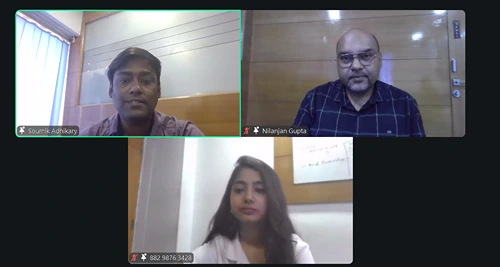
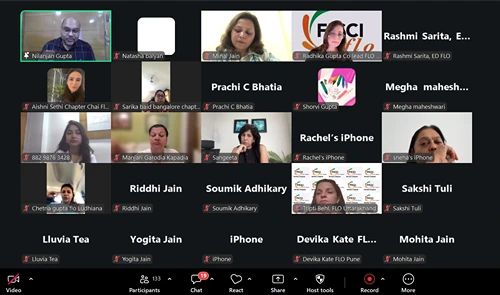
FICCI FLO, under the leadership of the National President, Ms. Puja Garg, in collaboration with Online Legal India, hosted an insightful and practical session, “Building A Scalable Food Business: Legal Foundations for Growth,” focused on providing insights to FLO members about building and scaling a food business while ensuring proper structure, compliance, registrations, certifications, and market readiness.
This webinar marks the beginning of the FLO Agriculture, Agro-Based & Food Processing Industry initiative, led by Initiative Head, Ms. Minal Jain, and Initiative Co-Lead, Ms. Radhika Gupta, who highlighted their vision to support and strengthen women-led food and agro-based enterprises across India. Ms. Jain highlighted the importance of structured systems and compliance for building successful food businesses in India without any delay or legal issues.
Online Legal India, reowned platform for business registration and compliance, served as the knowledge partner for this engaging session. Their team shared insights on Food Safety and Standards Authority of India (FSSAI) licensing requirements, Goods and Services Tax (GST) registration, and ISO 22000 certification for food safety management. The following representatives from Online Legal India led the session as keynote speakers:
- Mr. Nilanjan Gupta: Manager Marketing & Branding Communications.
- Ms. Anjali Shaw: Business Development Lead, PR and FSSAI Expert.
- Mr. Soumik Adhikary: ISO Standards Expert Trainer and Quality Management Specialist.
Special thanks to Ms. Rashmi Sarita, Executive Director, FICCI FLO, who extended support for FLO Agriculture, Agro-Based & Food Processing Industry initiative and highlighted women’s role in transforming these industries. According to Ms. Sarita, India’s food and agri business sector is already undergoing a major transformation, and women are playing an important role in its development. They account for roughly 45% of the agricultural labor force in developing nations and produce up to 80% of the food.
Key Takeaways
- Proper licensing and compliance help food and agro brands to stay visible, trusted, and legally secure among consumers, regulatory authorities, overseas buyers and collaborators.
- FSSAI license is mandatory for operating any food business in India. It ensures that your food enterprise adheres to the safety standards.
- There are three types of FSSAI licenses: Basic for startups with annual turnover up to 1.5 crores, State for medium-scale businesses with turnover between 1.5 to 50 crores, and Central for larger-scale businesses with turnover above 50 crores.
- GST registration and filing help food processing brands gain a positive identity in both domestic and international markets. It build credibility, and help a brand generate more sales. A GST-compliant business can easily start selling their products on e-commerce platforms and food delivery platforms, such as Amazon, Flipkart, Meesho, Swiggy, and Zomato.
- ISO-22000 is a certification which provides international credibility to a food business. This food safety management certification are internationally recognized, proving your commitment to global safety standards. Having ISO certification alongside your FSSAI license makes business easy for women entrepreneurs in international markets as customs clearance significantly becomes easier.
- Food manufacturers need to adhere packaging and labeling guidelines, such as mentioning product name, logo, ingredients, nutritional values, veg / non-veg declaration, allergy warning, manufacturer details, and date marking.
Impact & Outcome
145+ attendees benefited from the Building A Scalable Food Business webinar as they learned about essential business compliance and licensing requirements. The virtual session ended with a Q&A segment where participants asked Online Legal India team specific questions about licensing requirements, export certifications, and the sequential implementation of these compliance measures.
FSSAI licensing, GST registration, and ISO-22000 certification are not just regulatory requirements for food businesses but essential for building customer trust, enabling market access, and supporting business growth, particularly for entrepreneurs looking to scale.