
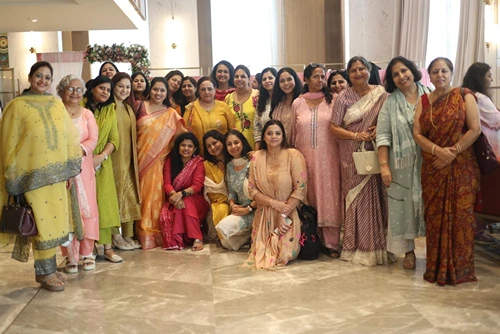
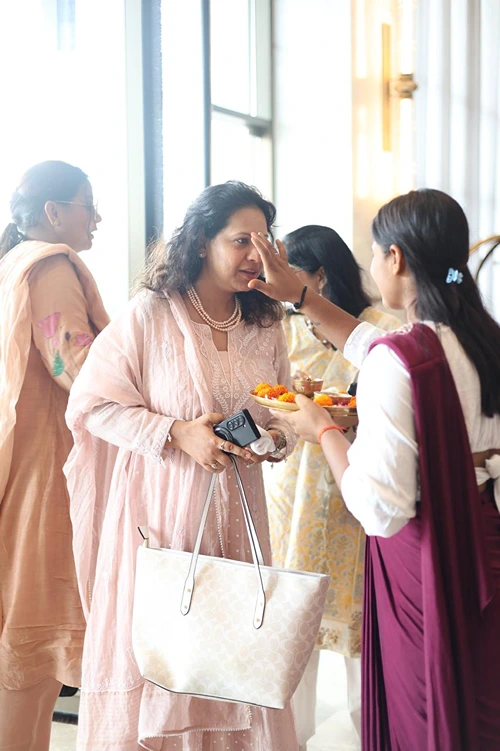
Hotel Taj Ayodhyadham on 11th July 2026 held a version of FLO programming that does not come together often — serious economic discourse and genuine spiritual immersion, in the same city, on the same day, for the same group of 80+ members.
The retreat opened with discussion — a conversation about what Ayodhya’s transformation actually represents beyond the headlines.
Members examined how a city defined for generations by its spiritual significance has, in a remarkably short span, become a genuine driver of regional economic activity. New hotels, expanded infrastructure, a hospitality sector growing to meet pilgrim demand, and allied businesses finding footing in a city that suddenly has millions of visitors passing through it each year — the conversation moved through all of this with the kind of specificity that turns an abstract trend into something members could actually connect to business opportunity and regional growth patterns across Uttar Pradesh.
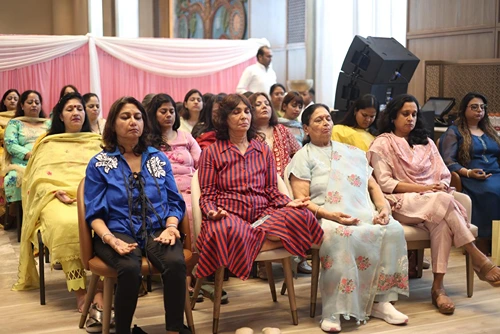
From discourse, the retreat shifted register entirely. The Sound Healing and Bhajan Clubbing experience gave members something words alone cannot — an immersion into Ayodhya’s spiritual atmosphere through sound, resonance, and devotional music. In a city built around faith, experiencing that faith through sound rather than sightseeing created a different, more felt kind of connection. Members described the session as meditative in a way that surprised them — the Bhajans in particular carrying an emotional resonance that a purely intellectual visit to Ayodhya would have missed entirely.
The retreat’s most personal moment came with Ram Mandir Darshan. For many members, this was not simply a tourism stop but a genuinely significant experience — standing before a site that carries deep personal and civilisational meaning for millions across India. The Darshan gave the retreat its emotional centre, grounding the day’s economic discussion and sound healing experience in something larger than either: a direct, personal encounter with a place that is, right now, actively becoming part of India’s living history.
80 members left Ayodhya having engaged with the city in three distinct registers — as economists, as seekers of stillness, and as pilgrims. Few retreats manage even one of those fully. This one held all three.