

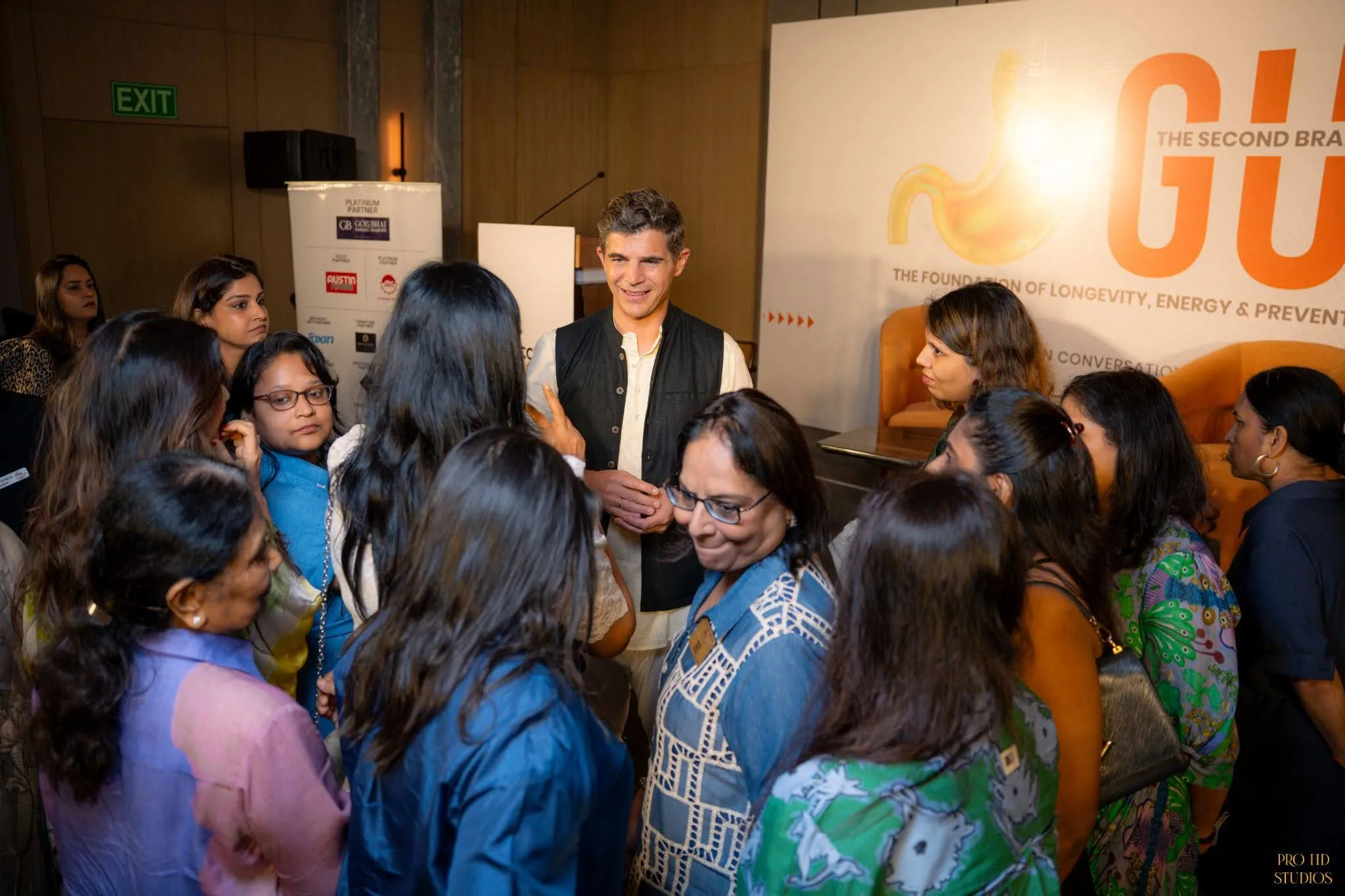


YFLO Kolkata, under the leadership of Chairperson Anisha Juneja, hosted “Gut: The Second Brain,” a two-day Health & Wellness initiative in collaboration with VIVAMAYR Austria on 19th and 20th September 2026 at Hyatt Centric, Kolkata. The session also welcomed members of FLO Kolkata. The programme focused on gastrointestinal health, the gut–brain axis, microbiome function, and the role of digestive physiology in holistic well-being, combining personalised medical consultations with an expert-led discussion.
The first phase, held on 19th September and during the first half of 20th September, featured personalised consultations with Dr. Sepp Fegerl, Medical Director, and VIVAMAYR Maria Wörth. A total of 11 YFLO members participated, gaining an opportunity to discuss gut health and individual wellness concerns in a dedicated consultation setting. The second phase took place on the evening of 20th September, featuring a talk show with Dr. Sepp Fegerl and Irina Sharma.
The discussion explored the gut–brain axis, a bidirectional communication network linking the gastrointestinal tract and central nervous system through neural, endocrine, immune, and metabolic pathways. From a medical perspective, the programme highlighted the gastrointestinal tract as a complex physiological system responsible not only for digestion and nutrient absorption but also for interactions with immune regulation, metabolic processes, and neurological signalling.
Particular relevance was given to the gut microbiota—the diverse community of microorganisms residing in the digestive tract—and its potential influence on intestinal homeostasis, immune function, and host metabolism. The discussion also provided a framework for understanding enteric nervous system (ENS) activity, vagal nerve signalling, and neuroendocrine communication in the relationship between the digestive system and the brain. The gut microbiome and its metabolites, including short-chain fatty acids produced through microbial fermentation of dietary fibre, are important areas of research into intestinal health and systemic physiological processes.
These interconnected mechanisms demonstrate why gastrointestinal health is increasingly considered an integral component of broader medical and wellness discussions. The programme further highlighted the importance of gastrointestinal homeostasis, intestinal barrier integrity, digestive function, and the interaction between physiological and lifestyle factors in maintaining digestive well-being. Nutrition, dietary diversity, sleep, physical activity, and stress regulation can all influence aspects of gastrointestinal function, although individual requirements and clinical interventions vary.
The two-part format strengthened the initiative by combining individual medical engagement with collective health education. While the consultations offered members an opportunity for personalised interaction, the evening talk show extended awareness of digestive physiology and the gut–brain connection to a wider audience, recording a footfall of 110 attendees.
Through this collaboration, YFLO Kolkata reinforced its commitment to promoting evidence-informed health awareness and facilitating engagement with specialised medical expertise. Gut: The Second Brain brought together clinical consultation, scientific discussion, and wellness education, encouraging members to develop a more informed understanding of gastrointestinal health and its relationship with overall well-being.