
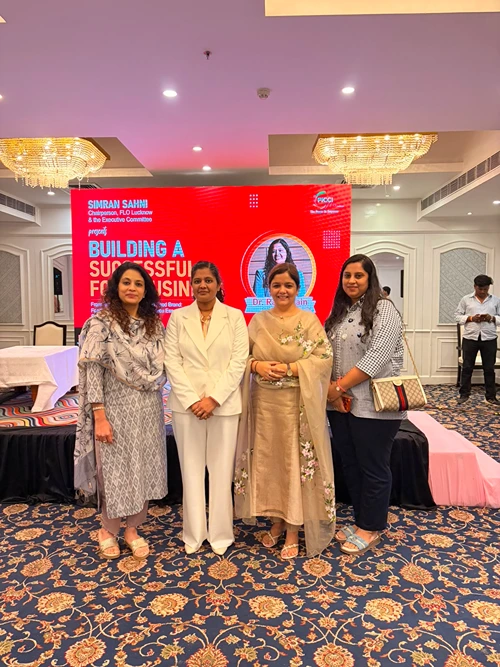
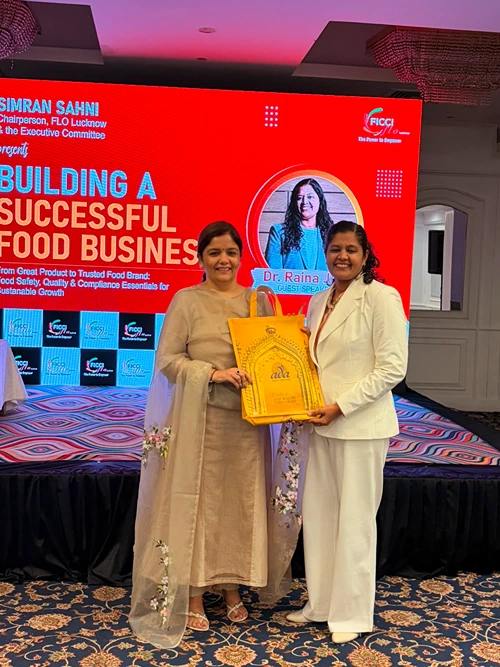
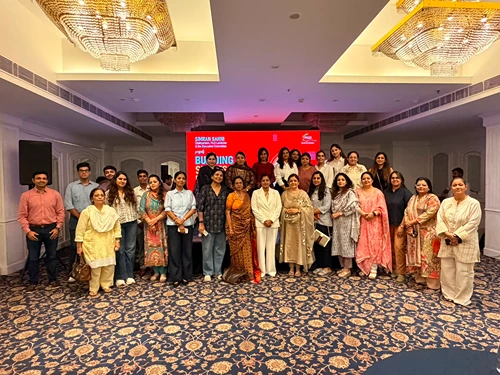
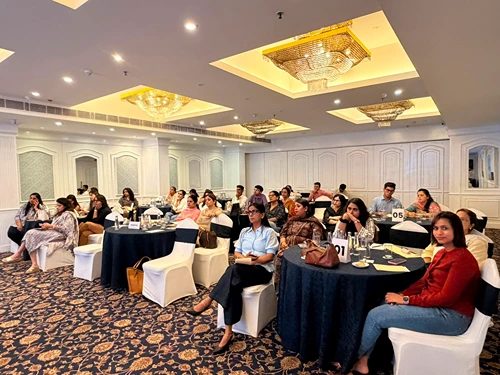
FLO Lucknow, under the leadership of Chairperson Ms. Simran Sahni, hosted a session that addressed the part of food entrepreneurship most workshops skip entirely — not the product, but everything that has to happen around it before that product can legally, safely, and credibly reach a customer.
The speaker, Dr Raina Jain, opened with FSSAI compliance, breaking down requirements that many members had heard referenced but never had properly explained. She walked through what registration and licensing actually involve, which requirements apply at which stage of business growth, and how food safety standards translate into practical, everyday operational decisions — not abstract regulatory language, but specific steps a home entrepreneur or small manufacturer needs to take.
From domestic compliance, the session moved into considerably more ambitious territory: export readiness. For members with aspirations beyond the local market, Dr Jain unpacked what genuinely matters — APEDA support mechanisms, HACCP protocols, ISO 22000 certification, and the broader landscape of global food safety standards that determine whether a product can credibly compete internationally. For many in the room, this was the first time these certifications had been explained not as distant, unreachable benchmarks, but as achievable milestones with a clear path toward them.
The session’s final stretch addressed something entrepreneurs frequently overlook simply because they don’t know it exists: government support. PMFME, ZED certification, and various MSME schemes offer real funding and institutional backing for food businesses, yet remain underutilised largely due to lack of awareness and unclear application processes. Dr Jain walked members through what each scheme actually offers and how to begin the process of accessing it, converting what could have remained abstract policy names into a genuine, usable action plan.
By the end of the session, 30+ members had moved from general uncertainty about compliance and growth pathways to a considerably clearer picture of what their next specific steps should be — whether that meant finally registering with FSSAI, exploring export certification, or applying for a government scheme that had, until that afternoon, felt entirely out of reach.