
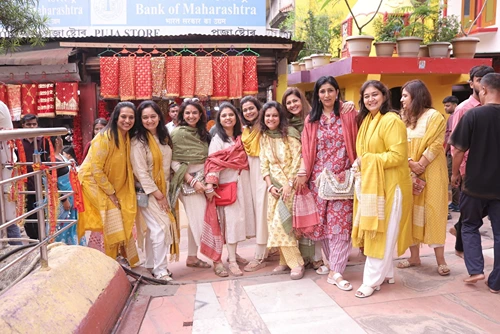
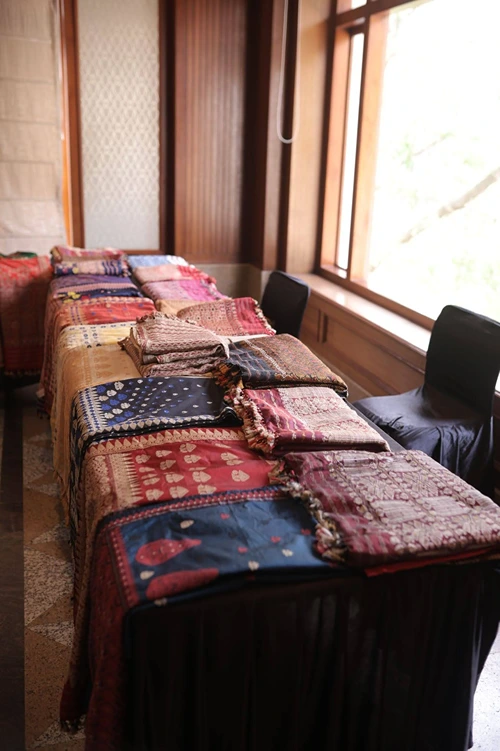
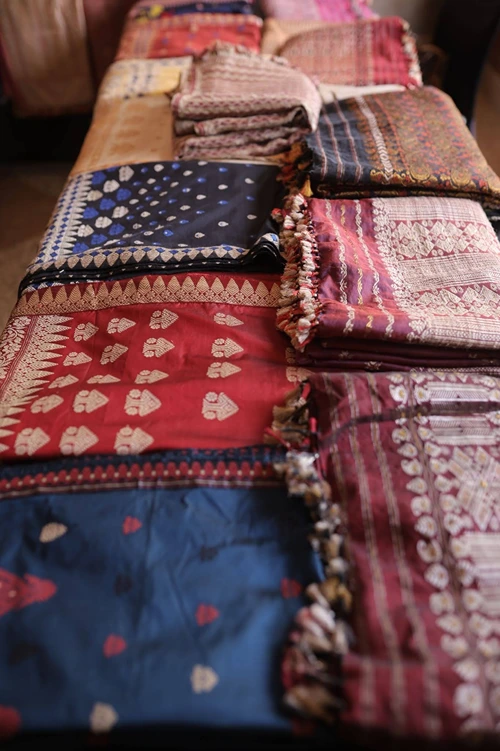
FLO Kolkata, under the leadership of ChairpersOn Ms. Mansi Agarwal, undertook the Handwoven Dupattas – Yarn Glory initiative under its Textile & Handloom vertical. The engagement showcased a collection of handwoven dupattas from Yarn Glory, Guwahati, bringing together traditional craftsmanship, ethical textile production and sustainable practices.
A significant aspect of the collection was its use of Ahimsa Silk.
Unlike conventional silk production, Ahimsa Silk is produced without killing the silkworm, making the process a more compassionate alternative within the silk industry. The dupattas further incorporated silk threads coloured with natural dyes, reducing reliance on synthetic colouring processes and adding another dimension to the collection’s sustainability credentials.
The initiative provided FLO members and beneficiaries an opportunity to appreciate handloom from a broader perspective—not simply as a textile tradition, but as an expression of craftsmanship, cultural heritage and conscious consumption.
Participants were introduced to the value of choosing textiles that respect both traditional skills and environmental considerations. The handwoven nature of the dupattas also highlighted the time, skill and attention to detail involved in artisanal textile production. By creating visibility for such products, the initiative supported greater appreciation of artisan-led enterprises and the livelihoods connected with India’s rich handloom ecosystem.
The engagement witnessed participation from 44 FLO members, reached 60 beneficiaries, and recorded an overall footprint of 110 individuals. It demonstrated how textile initiatives can serve as platforms for both cultural preservation and conversations around sustainability. Through Yarn Glory, FLO Kolkata brought together the heritage of Indian handloom with a contemporary emphasis on ethical production. The initiative encouraged participants to look beyond the finished product and understand the story, craftsmanship, and values embedded within it.
The programme thus reinforced the importance of supporting traditional textiles while making informed and responsible choices as consumers. It demonstrated that fashion and heritage can be aligned with compassion and environmental consciousness, creating a meaningful intersection between handloom, sustainability and responsible consumption.
To commemorate World Environment Day 2026, FLO Kolkata undertook three interconnected environmental initiatives on 5 June 2026, extending its environmental action across both the urban landscape of Kolkata and the ecologically sensitive Sundarbans. The first intervention was a Mangrove Restoration and Climate Resilience Initiative at Bali Island, Sundarbans, undertaken in collaboration with the Sundarban Foundation.
Through the plantation of 2,000 mangroves, the initiative contributed to the restoration of a vulnerable coastal ecosystem. Mangroves play a vital role in maintaining biodiversity and strengthening natural protection against coastal erosion, tidal surges and climate-related vulnerabilities. The initiative therefore represented a nature-based approach to climate action and ecosystem conservation.
The second programme, “My Sundarbans, My Responsibility – Student Climate Action & Environmental Stewardship Programme,” was conducted with students at Swapnopuron Shiksha Niketan, under Katakhali Swapnopuron Welfare Society. More than 100 students were sensitised to environmental protection, climate responsibility and the ecological challenges facing the Sundarbans. The programme combined environmental awareness with practical participation, including plantation and action-oriented activities, encouraging students to view environmental conservation as a shared responsibility rather than an abstract concept.
The third intervention focused on Urban Greening and Biodiversity Enhancement in Kolkata, undertaken in collaboration with the Calcutta Foundation. At Kolahol Ghoshti Park, 300 saplings were planted, including Snake Plants, Asian Pigeonwings, Madagascar Periwinkles and Jade Plants. The initiative aimed to strengthen urban green cover, enhance biodiversity and encourage greater community ownership of public green spaces.
Taken together, the three programmes reflected a comprehensive approach to environmental action—restoring coastal ecosystems, educating young environmental stewards and strengthening urban green spaces. The initiatives demonstrated how collaborative and community-driven action can create tangible environmental outcomes while building a stronger culture of sustainability and ecological responsibility.