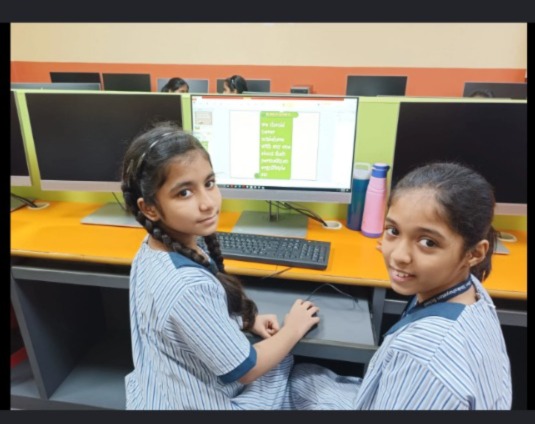
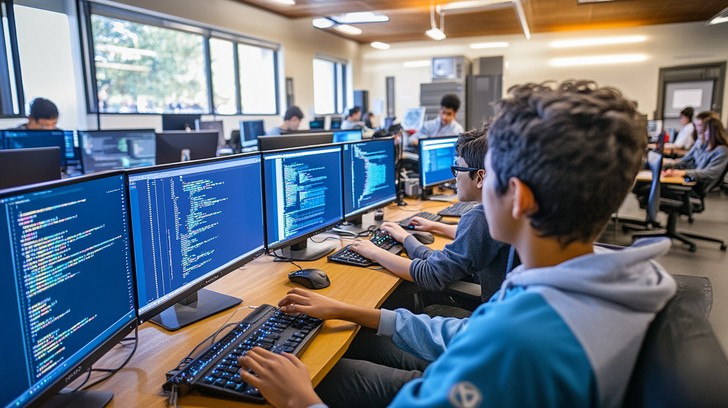
Under its STEM/AI Initiative, FLO Kolkata organized Code Reboot – Inter-School STEM & Coding Hackathon at BSS School, Kolkata, which served as a dynamic platform to cultivate computational thinking, analytical reasoning, innovation, and collaborative problem-solving among young learners. The objective of the Hackathon was to move beyond conventional classroom-based learning and provide students with an intellectually rigorous environment in which they could apply their technical knowledge to solve a live problem under structured, time-bound conditions.
The initiative brought young students from 10 leading educational institutions across Kolkata, including DPS New Town, Calcutta International School, Modern High School, St. Lawrence High School, The Future Foundation School, St. Xavier’s Collegiate School, Mahadevi Birla Shishu Vihar, Sri Sri Academy, South City International School, and The BSS School.
It encouraged healthy academic exchange and exposed students to diverse approaches to coding, logic and problem-solving. A central objective was to strengthen students’ ability to think independently, develop efficient solutions and adapt to challenges without relying on external digital resources. The challenge for the young minds started with the live unveiling of the problem statement, following which participating teams of two were required to analyse the challenge and develop efficient coding solutions within the stipulated timeframe.
Students utilised approved programming languages, including Python, C, C++, Java and allied technologies, to develop their solutions. The format encouraged participants to think critically, evaluate multiple approaches, make strategic decisions and work effectively with their teammates under time-bound conditions.
Participants were required to draw upon conceptual clarity, algorithmic understanding and technical competence while working collaboratively within their teams. The Hackathon also sought to nurture qualities increasingly essential in a rapidly evolving technology landscape—resilience, adaptability, strategic thinking, teamwork and confidence in decision-making.
Key Takeaways
- The Hackathon strengthened computational thinking, analytical reasoning and algorithmic problem-solving through practical application.
- The live problem statement encouraged students to think independently and develop solutions in real time.
- The no-internet challenge format emphasized conceptual clarity, technical knowledge and independent reasoning rather than external assistance.
- Working in teams of two strengthened collaboration, communication and collective decision-making.
- Participants demonstrated adaptability and resilience while navigating technical challenges within a structured, time-bound environment.
- The use of programming languages, including Python, C, C++, and Java, enabled students to apply their existing technical knowledge in a competitive setting.
- The participation of ten schools created a valuable platform for academic exchange, peer learning, and healthy competition.
- The initiative strengthened institutional engagement and created opportunities for future collaboration in coding, artificial intelligence, innovation, and experiential STEM learning.
- Code Reboot reinforced FLO Kolkata’s commitment to nurturing future-ready digital competencies, technological confidence and innovation-led thinking among young learners.
Impact & Outcome
Approximately 78 students from ten leading educational institutions participated in Code Reboot, an intellectually rigorous coding challenge. Through this initiative, FLO Kolkata aimed to create a meaningful experiential learning opportunity that would inspire greater interest in coding, STEM and emerging technologies, while encouraging young learners to explore innovation-led pathways and develop the skills required to become confident contributors to India’s future digital and innovation ecosystem.
It further established a strong foundation for continued engagement with participating institutions and future initiatives centred on coding, artificial intelligence, innovation challenges and technology-led experiential learning.