
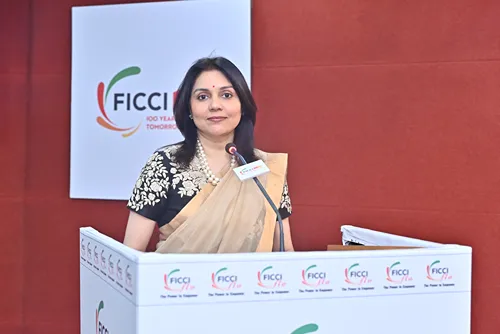
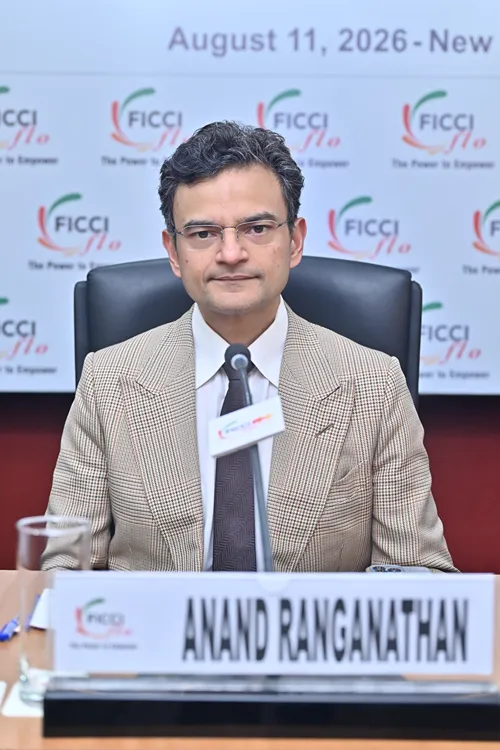
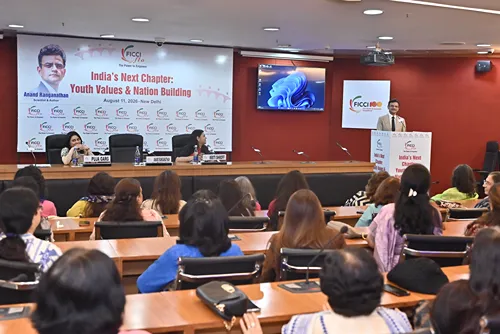
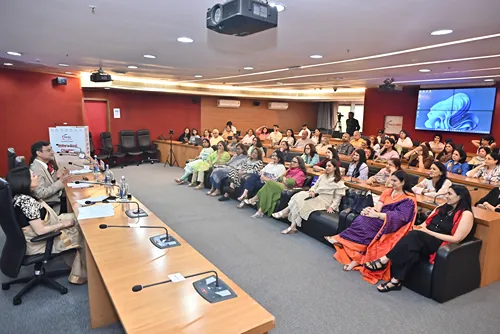
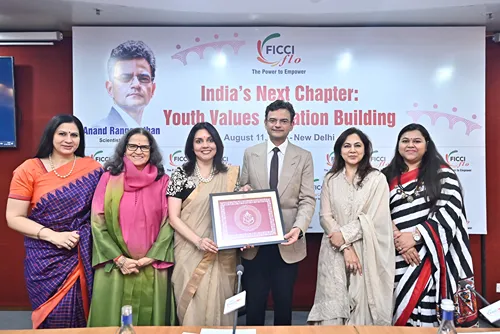
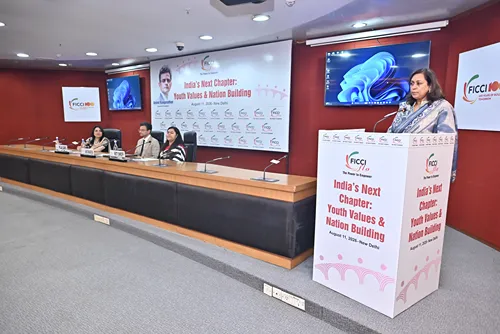
Under the leadership of 43rd National President Puja Garg, FICCI FLO hosted an engaging keynote session, “India’s Next Chapter: Youth, Values & Nation Building,” featuring acclaimed author, scientist and consulting editor at Swarajya, Mr. Anand Ranganathan. At the heart of the conversation was a compelling question: Does India need to build, or rebuild?
Mr. Ranganathan emphasised that nation-building is not the responsibility of the State alone. It is a shared responsibility between an accountable government and responsible citizens.
The session examined the fine line between welfarism and freebieism, urging citizens to question how public money is utilised and whether policies create sustainable, long-term value.
The message was clear: citizens cannot remain passive recipients of government policy. They are active stakeholders in the nation’s future.
Mr. Ranganathan acknowledged the following achievements in economic growth, infrastructure, and social indicators for highlighting India’s transformation since Independence:
- Life expectancy has risen from around 32 years to over 70 years.
- Literacy has increased from approximately 12.5% to around 71%.
- Infant mortality has fallen from around 160 to approximately 24.
- Nearly 270 million people have moved out of multidimensional poverty.
- GDP per capita nearly doubled, and poverty reduced from 29% to 11%.
- Foreign exchange reserves grew from $300 billion to over $700 billion.
- Renewable energy capacity grew from 2 GW to 110 GW.
- The midday meal scheme is highlighted as the single most impactful state intervention for long-term economic growth.
- The startup ecosystem has expanded from around 1,500 startups to over 130,000.
- Monthly GST collections exceeded 2.2 lakh crores, and vehicle sales reached 25 million annually.
Also, the discussion explored the role of economic reforms, GST, Direct Benefit Transfers, indigenous defence manufacturing and infrastructure in shaping India’s growth trajectory. According to Mr. Anand Ranganathan, progress must be accompanied by an honest assessment of the gaps that remain, such as child labour, connectivity to healthcare, vaccination, income inequality, multidimensional poverty, child malnutrition and stunting. As Mr. Ranganathan put it, India must move “from the treadmill to the travelator, and subsequently to the elevator”—from incremental progress to accelerated development.
Agriculture emerged as another critical area for reform; 44% of the workforce is in a sector contributing only 13.5–14% to GDP. There are issues to resolve, such as massive fruits/vegetables wastage, inefficient water use, and lack of modern storage. Mr. Ranganathan urged greater technology, productivity, modernisation and efficient use of resources to boost the agriculture sector.
The larger objective, he emphasised, should be to create a healthier, wiser, wealthier, skilled and adaptable workforce, while enabling entrepreneurs and wealth creators to drive opportunity and economic growth. The conversation ultimately returned to India’s most powerful resource, its youth. In an era shaped by AI, automation and rapid technological change, young Indians will need more than degrees.
They will need employability, adaptability, entrepreneurial thinking, leadership and values. The India of tomorrow will be shaped not only by what young people achieve professionally, but by how they participate as citizens. The session concluded with a powerful reminder: “Viksit Bharat 2047 cannot be built by the State alone. It requires a partnership between an accountable State and responsible, informed and engaged citizens.”
Nation-building is not merely about GDP, infrastructure or technology. It is about building a society that is prosperous, healthy, wise, resilient and conscious of its responsibilities. The session left participants with one fundamental question: What can each one of us do to build the India we want to see?
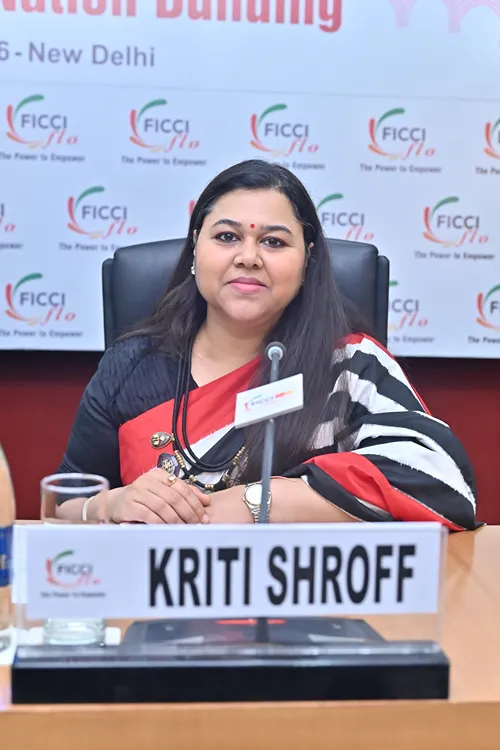
India’s next chapter will be written by its youth, with values, responsibility, enterprise and informed citizenship at its core. Ms. Kriti Shroff, Past Chair, FICCI FLO Kanpur Chapter, served as the Day Chair and Emcee, steering the session with energy. Ms. Archana Luthra, Governing Body Member, FICCI FLO, delivered the Vote of Thanks, expressing appreciation to the speaker and participants for an enriching and thought-provoking session.