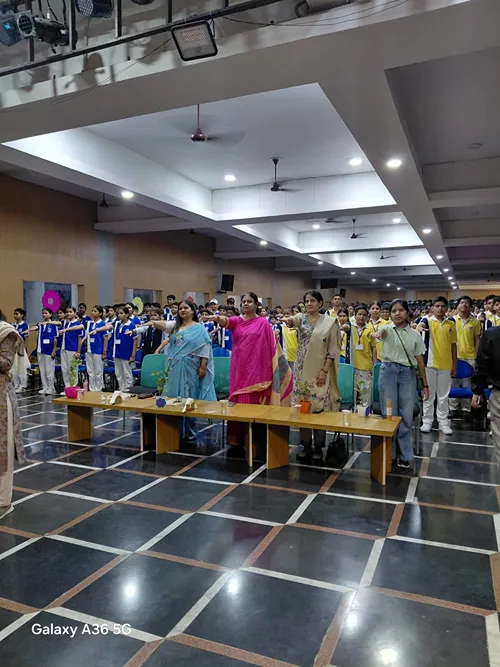
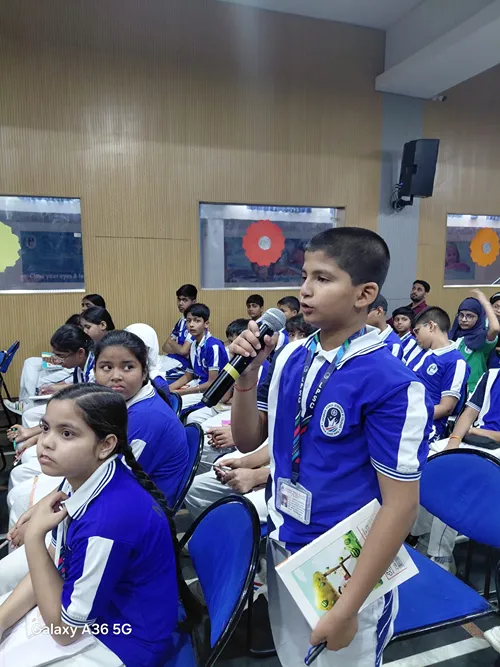
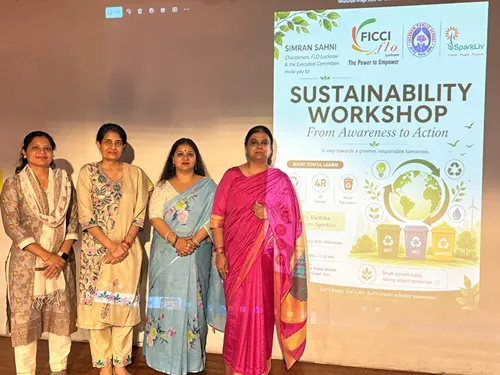
FLO Lucknow, under the leadership of Chairperson Ms. Simran Sahni, hosted an informative and engaging workshop, “Sustainability Workshop — From Awareness to Action,” for the students of Lucknow Public School, Sec-E, Amrapali Yojna, Lucknow. The workshop was based on the logic: If you want to change how a city thinks about plastic waste, start with the children who will inherit it.
It was led by Ms. Radhika Misra of SparkLiv Foundation, who has built an entire community practice around exactly this kind of education, and brought the workshop to life with an approach that was anything but textbook. This live session targeted 400 students between Classes 6 and 8 — an age group old enough to understand why it matters and young enough to still be shaped by what they learn.
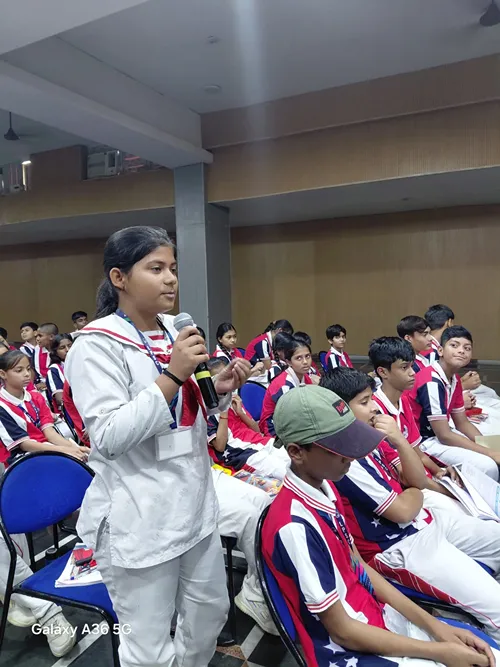
The workshop had a specific ambition: to move students from passive awareness — the general sense that plastic is bad and recycling is good — into actual understanding. The Circular Economy model. The 4R Concept. Waste segregation in practice. These are not complicated ideas, but they are almost never taught in a way that makes them feel personally relevant or actionable.
The Circular Economy was explained not as an economic theory but as a common-sense alternative to the broken system most people accept without question — make, use, discard, repeat. The 4R framework — Refuse, Reduce, Reuse, Recycle — was unpacked practically, with examples that sat inside the students’ own daily lives. Waste segregation moved from concept to practice, with students understanding not just what to separate, but why the separation matters at every stage of the chain.
A week-on-week sustainability creative series will be shared with the school through summer vacation — so the conversation continues at home, reaching parents through class groups, extending the circle of impact outward from the 400 students in the room. A structured Plastic Waste Collection Drive was planned in collaboration with SparkLiv — with collected plastic to be upcycled, and the school to be recognised through appreciation certificates presented in upcycled frames. The loop closes on itself, beautifully and deliberately.
Key Takeaways
- 400+ students from Classes 6 to 8 were introduced to the Circular Economy model, the 4R Concept, and practical waste segregation — through an interactive session that prioritised understanding over information
- Radhika Misra of SparkLiv Foundation brought on-ground expertise and community credibility into the classroom, making sustainability feel relevant and personally actionable for young students
- The workshop was designed for continuation — a week-on-week sustainability creative series will be shared through summer vacation, reaching students and parents beyond the school day
- A structured Plastic Waste Collection Drive was planned in collaboration with SparkLiv, ensuring the workshop translates into measurable, physical impact
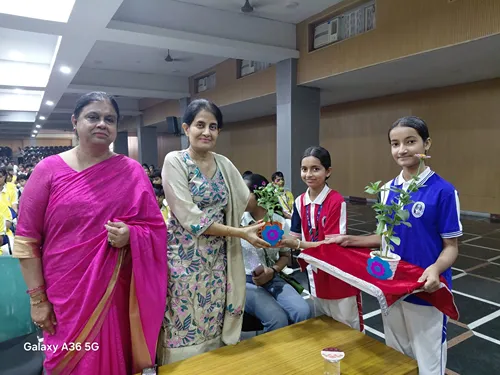
- Collected plastic will be upcycled, and the school will be recognised through appreciation certificates presented in upcycled frames — closing the sustainability loop in a way students can see and hold
- Reaching students at ages 11 to 14 is a deliberate intervention — old enough to understand the why, young enough for the habit to form and last
- The FLO–SparkLiv MOU is already producing on-ground outcomes, with the school workshop being one of its first structured community activations
- Sustainability education that reaches parents through children’s class groups creates a ripple of awareness that extends well beyond the institution itself
- When young people are treated as eco-warriors rather than passive recipients of environmental messaging, their engagement and ownership of the issue transform entirely
- FLO Lucknow’s Greentech & Circular Economy agenda is moving decisively from institutional commitment to community action — and this workshop is the evidence
Impact & Outcome
400+ students from Lucknow Public School benefited from the Sustainability workshop as they learned about plastic pollution, recycling, the circular economy model, and waste segregation. Beyond the single session, the objective was continuity — a summer series, a collection drive, a recognition system. Because awareness that stops at the classroom door has never changed anything.