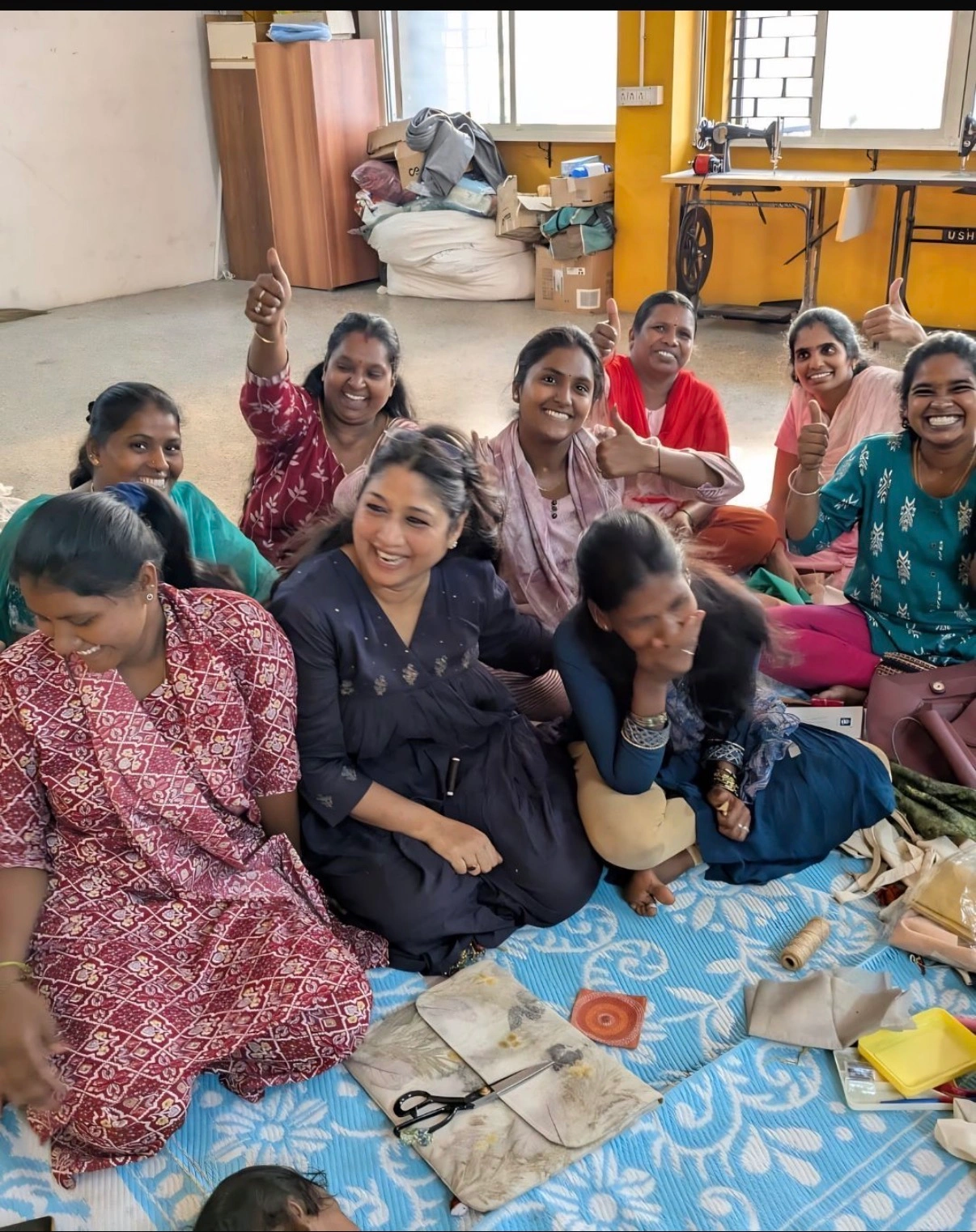
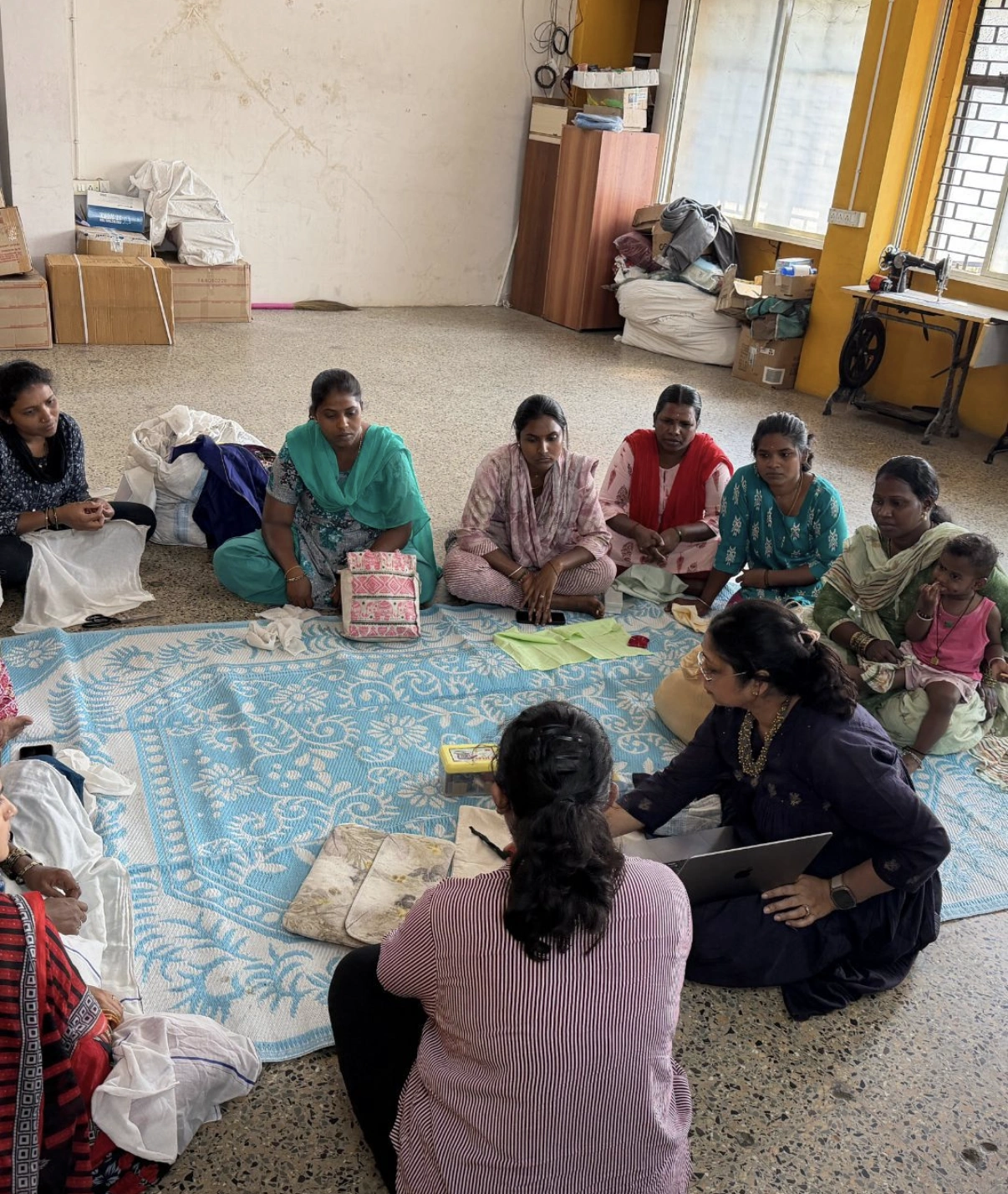
FLO Bengaluru’s National Handloom, Textiles & Handicrafts Vertical hosted a dynamic and impactful Skill Development Workshop on Textile Waste Upcycling & WUD E-Campus Introduction on 18th April 2026. The event brought together women participants with a shared goal — to transform textile waste into opportunity, and skill into sustainable livelihood.The workshop was anchored by special speaker Bharti Maheshwari, whose expertise and passion for sustainable textiles set the tone for an engaging and informative session.
Participants were introduced to hands-on upcycling techniques, learning how discarded fabric scraps and textile by-products could be creatively repurposed into functional, sellable products. From basic upcycling methods to finishing and presentation, the training was designed to be immediately applicable, requiring minimal investment and tools — making it highly accessible for women at the grassroots level.
A significant highlight of the event was the formal introduction of the WUD E-Campus platform. Participants were walked through the digital learning ecosystem, which offers structured courses in areas such as product design, branding, packaging, and entrepreneurship. This segment was particularly well-received, as it opened a pathway for continued learning beyond the workshop, allowing participants to upskill at their own pace from the comfort of their homes. With 60 potential learners identified for E-Campus access, the event’s reach extended well beyond the 12 direct participants present in the room.
The workshop was thoughtfully aligned with multiple enablers — MSME & Export, Startup, Financial Literacy, and Health, Wellness & Life Skills — reflecting its multi-dimensional approach to women’s empowerment. Discussions touched on how upcycled products could be positioned for local markets and export potential, how small businesses could be registered and scaled, and how financial planning plays a critical role in sustaining micro-enterprises.
With a footprint of 12,500 and a strong foundation laid for future skill-based initiatives, the event exemplified the Bengaluru Chapter’s commitment to fostering inclusive economic growth through the handloom and textile ecosystem. It was not merely a workshop — it was a stepping stone toward a more self-reliant and entrepreneurial community.