
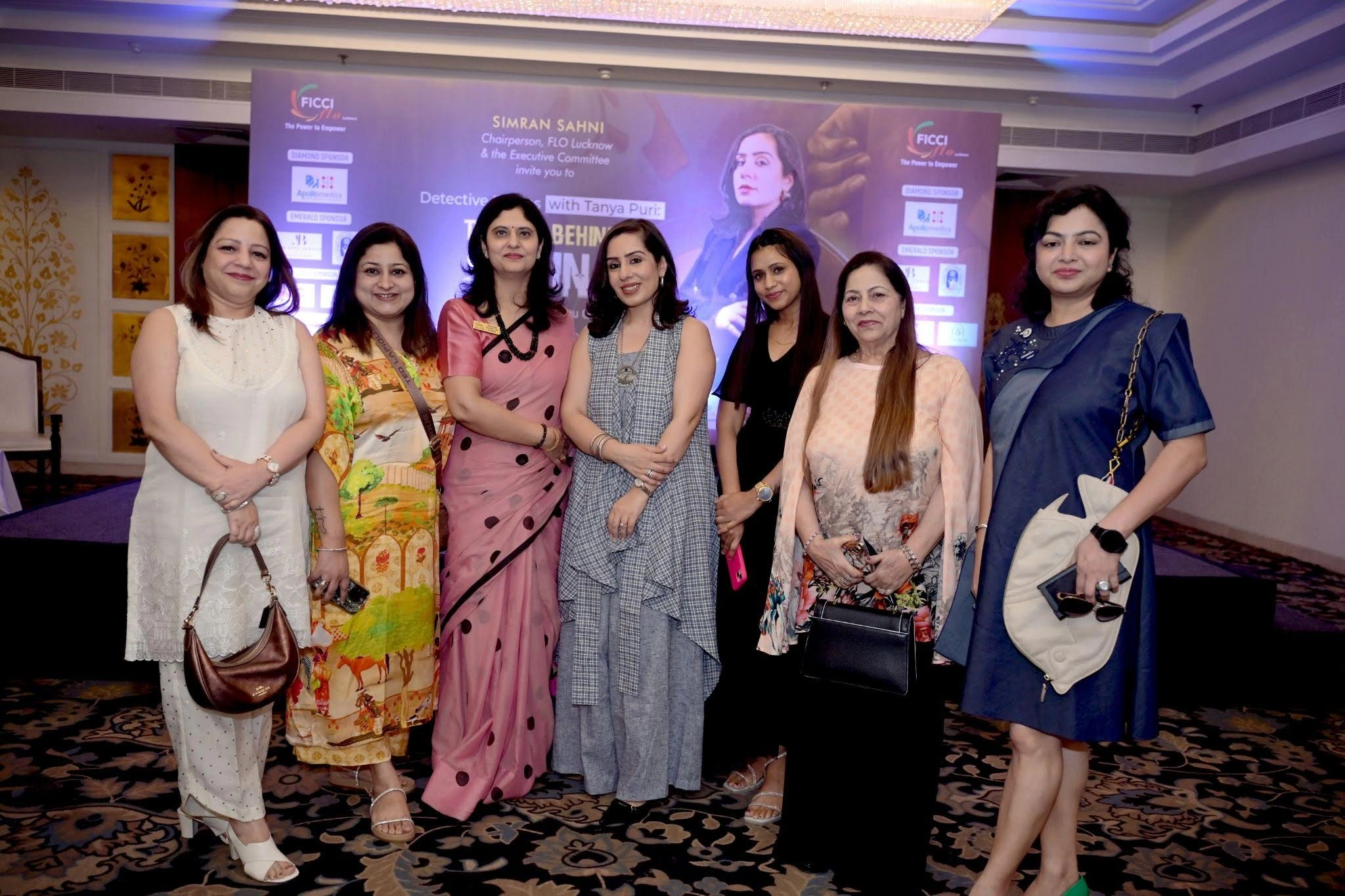
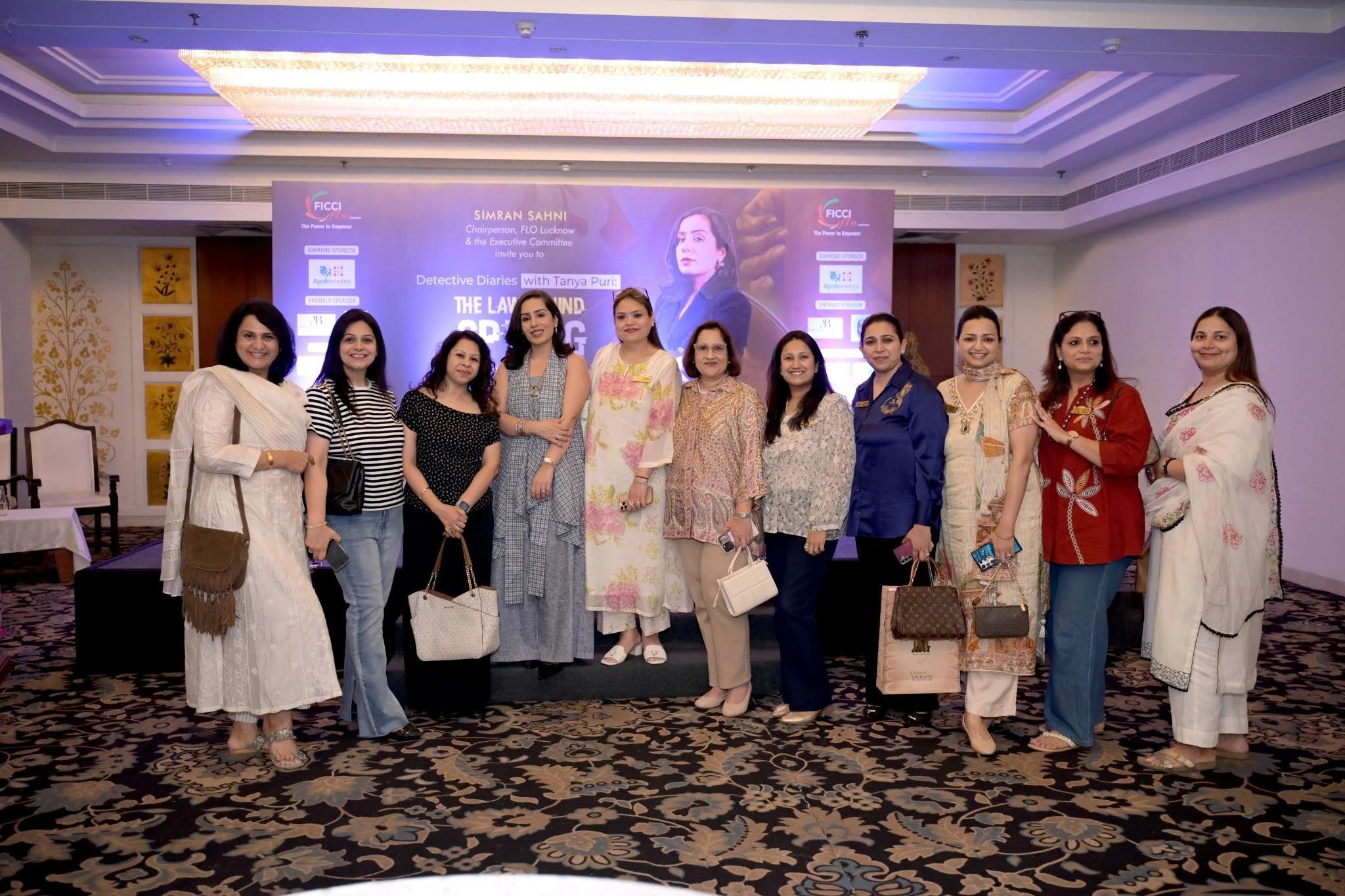

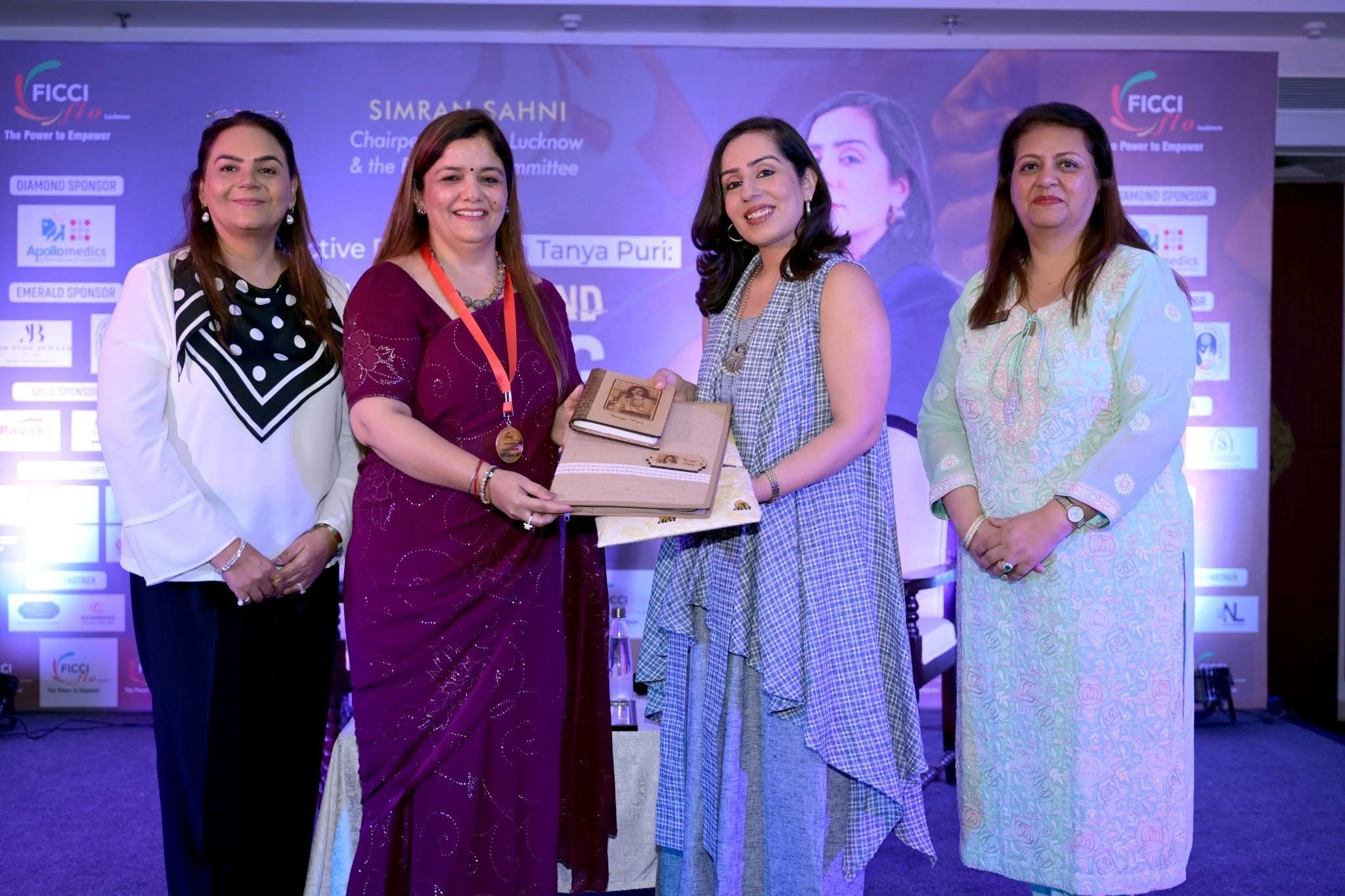
FLO Lucknow, under the leadership of Chairperson Simran Sahni, hosted an insightful session, titled “Detective Diaries with Tanya Puri — The Law Behind Spying,” at Hotel Clarks Avadh. This evening was quieter in tone, weightier in subject, and more personal in its impact than the room perhaps anticipated. The session was led by Ms. Tanya Puri, CEO of Lady Detectives and one of the country’s youngest women detectives, who spoke about the legality of spying, surveillance, and the right to privacy.
In an age where a phone can be tracked, a conversation recorded, and a life monitored without consent, legal awareness is no longer optional — it is a form of self-defense. This session was designed to give women exactly that: a clear, honest, and practically grounded understanding of where surveillance begins, where it becomes a violation, and what the law says about both.
Moderated by Simu Ghai, the conversation opened with the foundational distinction that shaped everything that followed — the difference between legal surveillance and illegal intrusion. Tanya walked the audience through the landscape of digital privacy and cyber safety, explaining what constitutes lawful investigation, what crosses into criminal territory, and how women can protect themselves in both directions: from being watched without consent, and from crossing legal lines themselves when seeking information.
Drawing from real-life cases — shared without identifying details, handled with care — she illustrated how surveillance situations often unfold in relationships, and how the law applies in circumstances that are emotionally charged and legally nuanced. The audience was visibly engaged: these were not abstract legal concepts, but situations with direct relevance to lived experience.
The session’s interactive Q&A was among its most powerful segments. Members asked with a candour that reflected both the trust the evening had built and the genuine need for this kind of informed, non-judgmental conversation. Questions ranged from digital safety practices to the use of detective services within legal frameworks — and Tanya answered each with the precision of someone who has navigated exactly these situations in practice.
Key Takeaways
- Legal awareness in the digital age is a critical, non-negotiable component of women’s empowerment
- There is a clear and enforceable distinction between legal surveillance and illegal spying — and every woman deserves to know it
- Digital privacy is not a technical concern; it is a personal safety issue with direct legal implications
- Real-life case learnings, shared responsibly, are among the most effective tools for building legal literacy
- Women have both the right to seek lawful investigative support and the right to beprotected from unlawful intrusion
- Ethical boundaries in investigations exist within a legal framework — and understanding that framework is the first line of defense
- Personal data protection is an active responsibility, not a passive assumption
- Open, informed dialogue on sensitive subjects builds stronger, more aware communities within FLO
- Access to expert knowledge — on law, privacy, and rights — is itself a form of empowerment
- FLO’s role in facilitating these conversations positions the chapter as a space for learning that extends well beyond business
Impact & Outcome
Around 140+ women participated in this insightful and engaging session about demystifying the world of investigations and digital surveillance for an audience. Detective Diaries with Tanya Puri was conceived as a conversation that most rooms avoid — one that sits at the uncomfortable intersection of privacy, relationships, and rights. It sought to equip members with the knowledge to identify when their privacy is being compromised, understand what lawful support looks like, and make informed decisions in situations that are often both legally complex and deeply personal. Not through inspiration alone, but through information: the kind that changes how women understand their rights and their options.