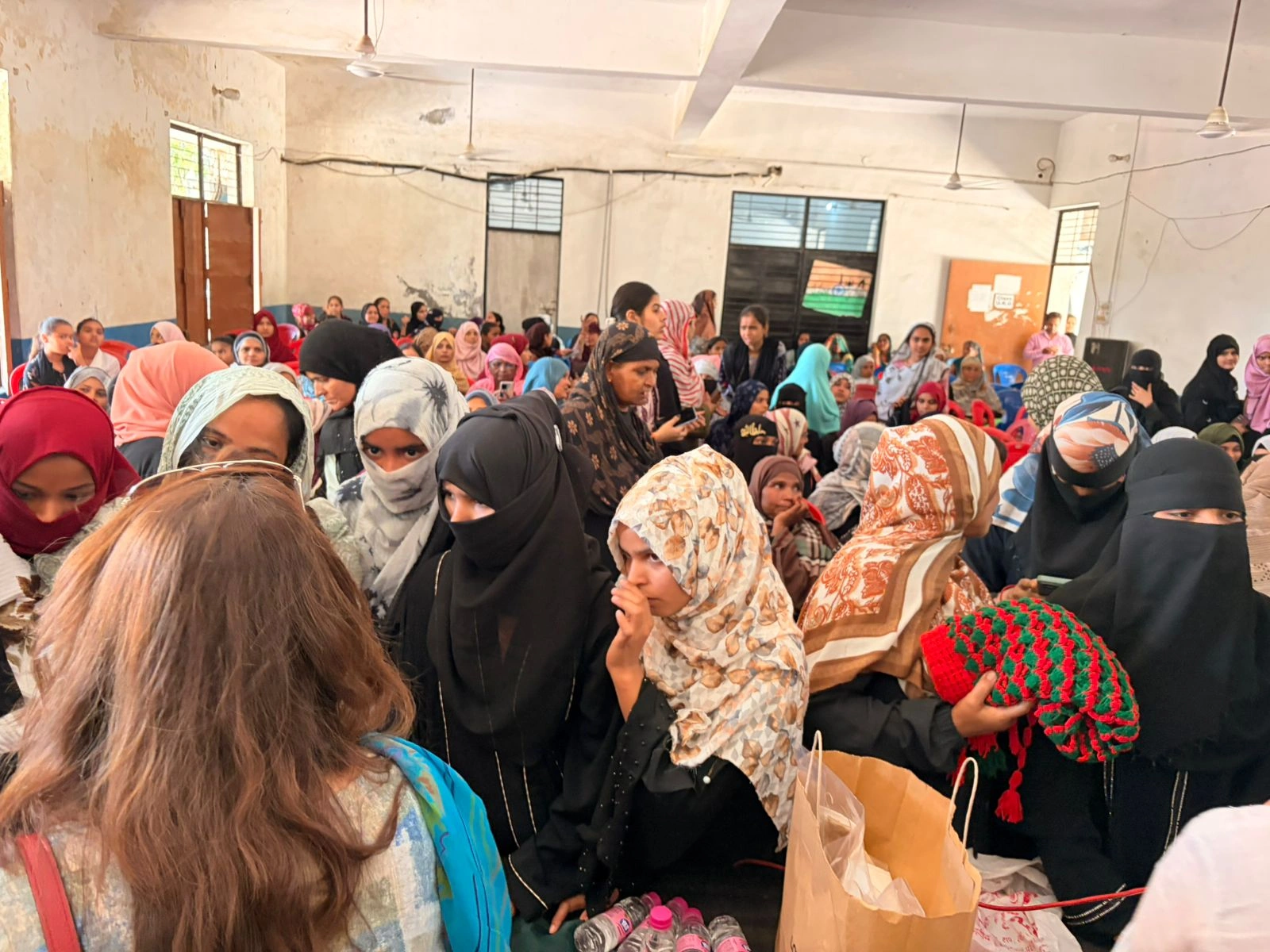
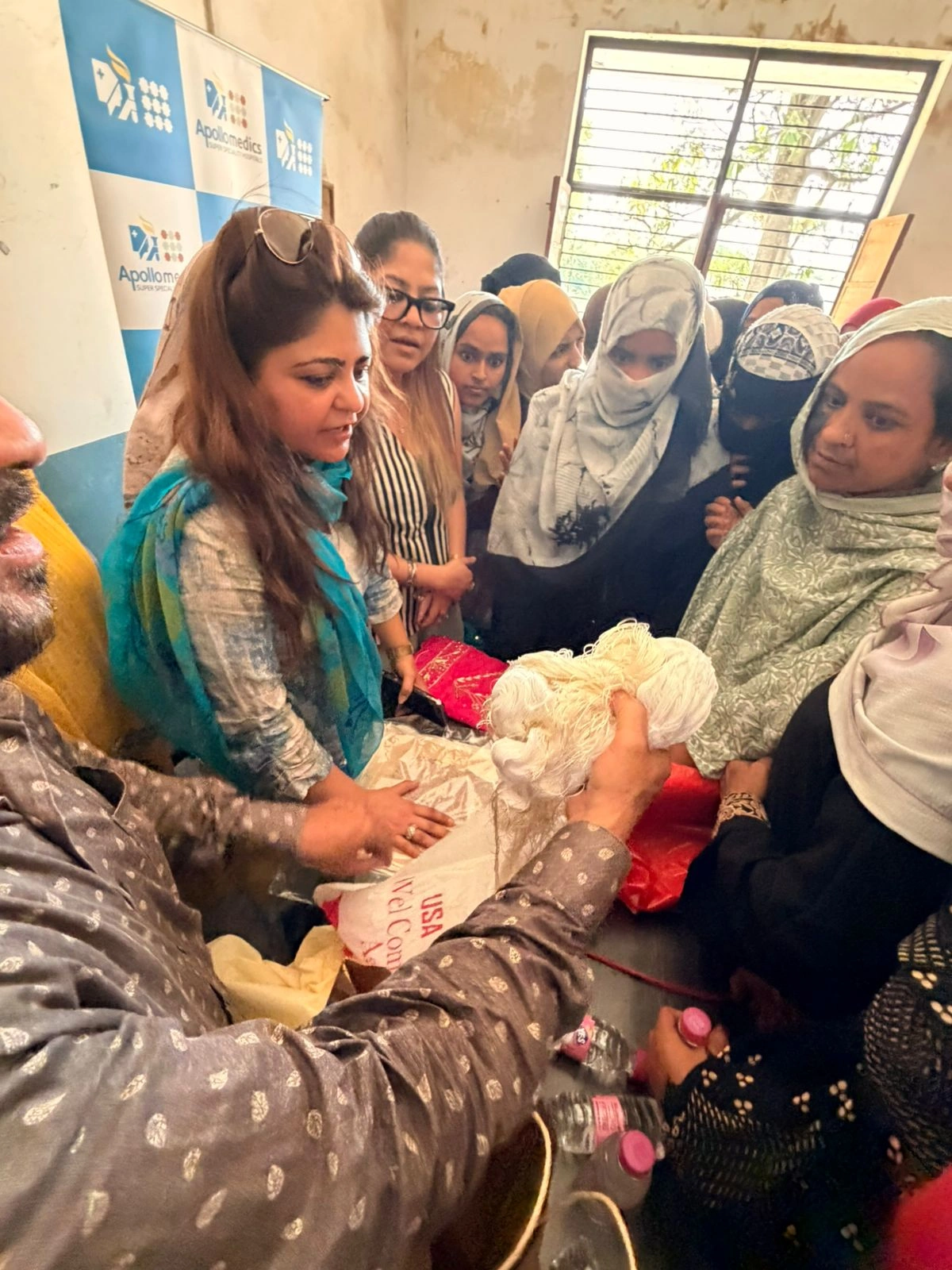
FLO Lucknow, under the leadership of Chairperson Ms. Simran Sahni, hosted a Rural Outreach Initiative, focused on Textile skill development & women’s health awareness for the women from Village Dundwa in Kannauj. Over 200 women gathered for an initiative that ran on a simple premise: go to where women are, and bring them what they actually need. Not a brochure. Not a registration form. A textile expert and a doctor. Vani Anand opened the day with a session on Karchobi and Chikankari — two embroidery traditions that many of the women present had grown up watching, and some had practised themselves. Her reframing was important. These are not dying crafts to be documented.
They are skills that sit inside these women’s hands right now, and with the right training, market linkage, and encouragement, they can become a consistent livelihood. The session was practical — techniques demonstrated, patterns discussed, and questions about earning potential answered directly. Women who arrived thinking of embroidery as a household activity left understanding it differently: as a craft with commercial dignity. The afternoon shifted to something quieter but equally necessary. Dr. Nikita from Apollo Medics sat with the women of Dundwa and talked about menstrual health. In rural settings, this conversation is almost never had — not by doctors, not in schools, and often not even within families.
Taboo, stigma, and simple lack of access keep women uninformed about their own bodies for most of their lives. Dr. Nikita worked through hygiene practices, warning signs, preventive care, and the basic entitlement every woman has to understand her own health. The room was attentive in the way rooms are when people are hearing something they needed to hear for a long time. Two hundred women. One village. A morning of craft and an afternoon of health. It does not sound large, but in Dundwa, on that Sunday, it was the most significant thing that happened. And for the women who attended, the day carried the particular weight of being seen, reached, and taken seriously by people who did not have to come — but did.
Key Takeaways
- 200+ rural women in Village Dundwa, Kannauj, were reached through a two-part intervention combining textile skill development and women’s health awareness.
- Karchobi and Chikankari were presented not as heritage crafts to be preserved, but as living, marketable skills capable of generating sustained income.
- Women who already possess traditional embroidery knowledge were shown a pathway to convert that knowledge into a dignified, consistent livelihood.
- Dr. Nikita’s session on menstrual health addressed a topic that reaches most rural women through no formal channel — filling a gap the system has long ignored.
- Science-backed, practical health information delivered in a non-clinical, community setting is far more accessible and impactful than facility-based outreach.
- Combining livelihood skills with health awareness in a single intervention reflects a genuinely holistic understanding of what rural women’s empowerment requires.
- FLO Lucknow’s decision to travel to the village — rather than asking women to travel to a programme — made attendance possible for women who would otherwise have been excluded.
- Textile traditions rooted in a community’s own cultural heritage carry higher adoption and pride when positioned as an economic opportunity rather than charity.
- Taboo around menstrual health in rural communities can be dismantled through the right combination of expert presence, community trust, and honest conversation.
- This initiative establishes a replicable outreach model — health plus livelihood, in-village, delivered together — that FLO Lucknow can deploy across other ruralcommunities.
Impact & Outcome
Around 200+ participants became a part of this visit to the village of Dundwa to support rural women through Textile Skill Development & Health Awareness. The initiative brought together two distinct areas of expertise: Vani Anand’s deep knowledge of Karchobi and Chikankari traditions provided the livelihood dimension, while Dr. Nikita of Apollo Medics anchored the health awareness component.
Together, their combined presence gave the programme the dual credibility — artisanal and medical — that made it genuinely impactful for the women of Dundwa. That was the objective. Not a camp. Not a drive. A genuine, two-part intervention that treated 200 women as complete human beings.