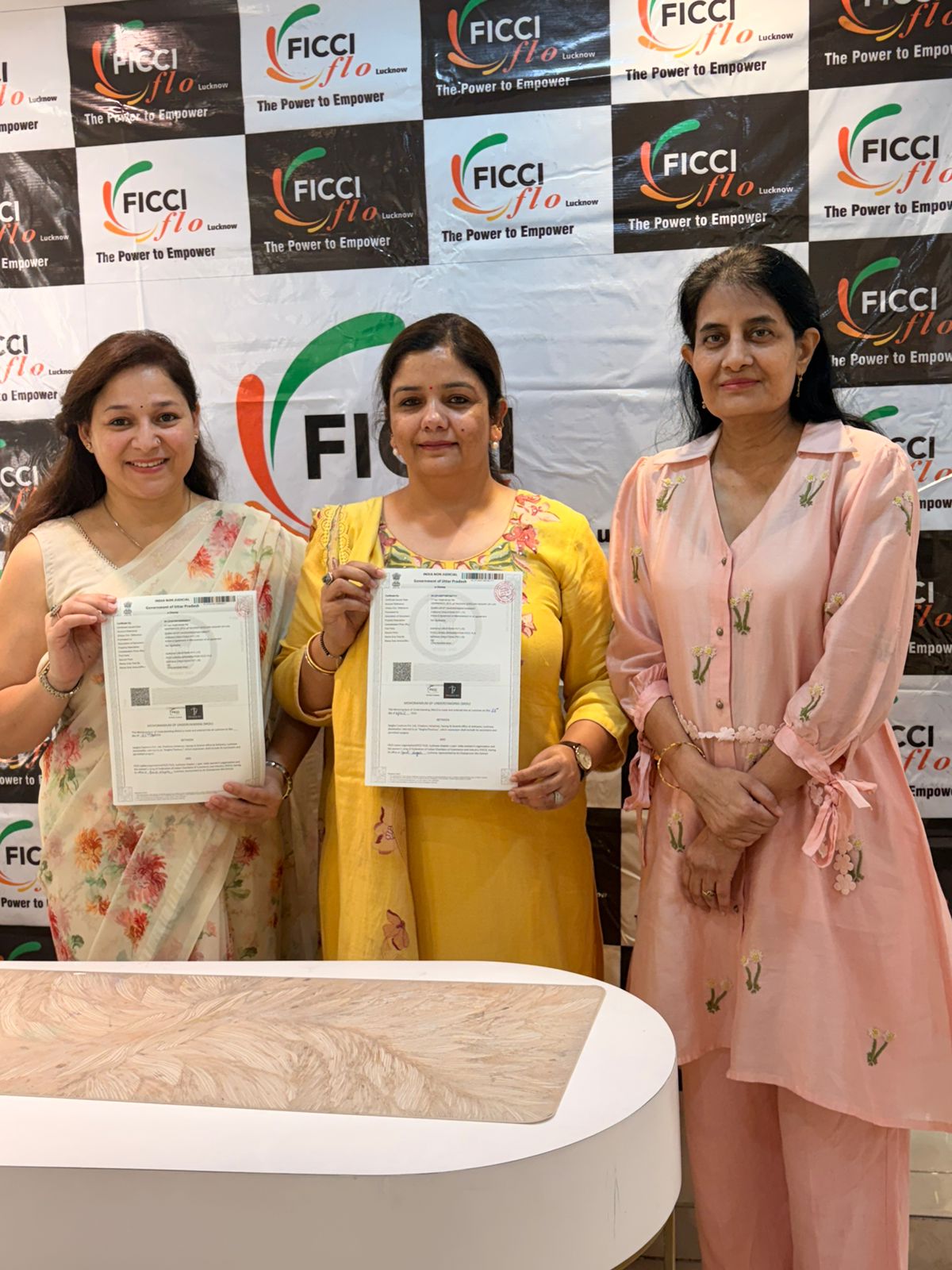
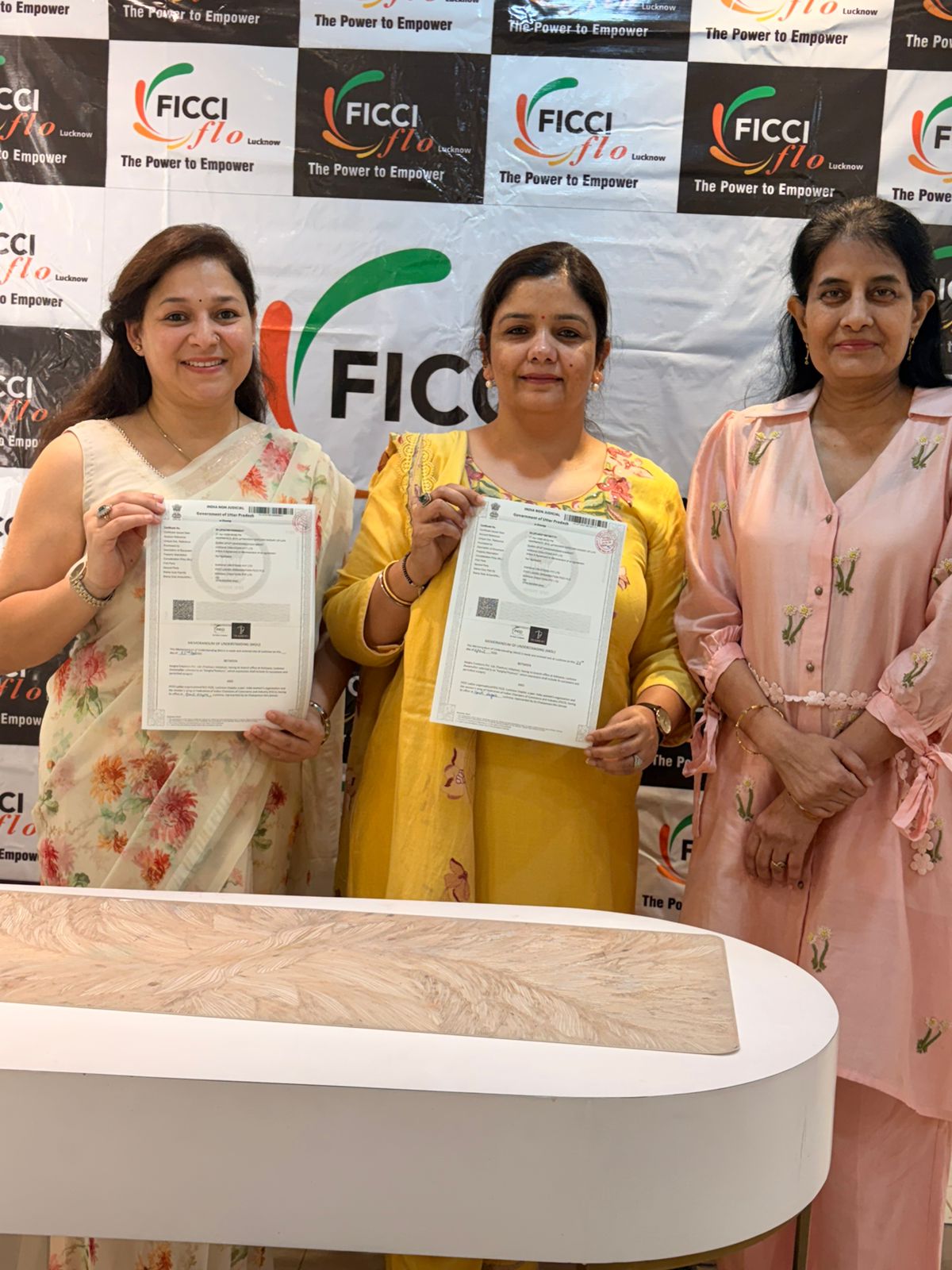
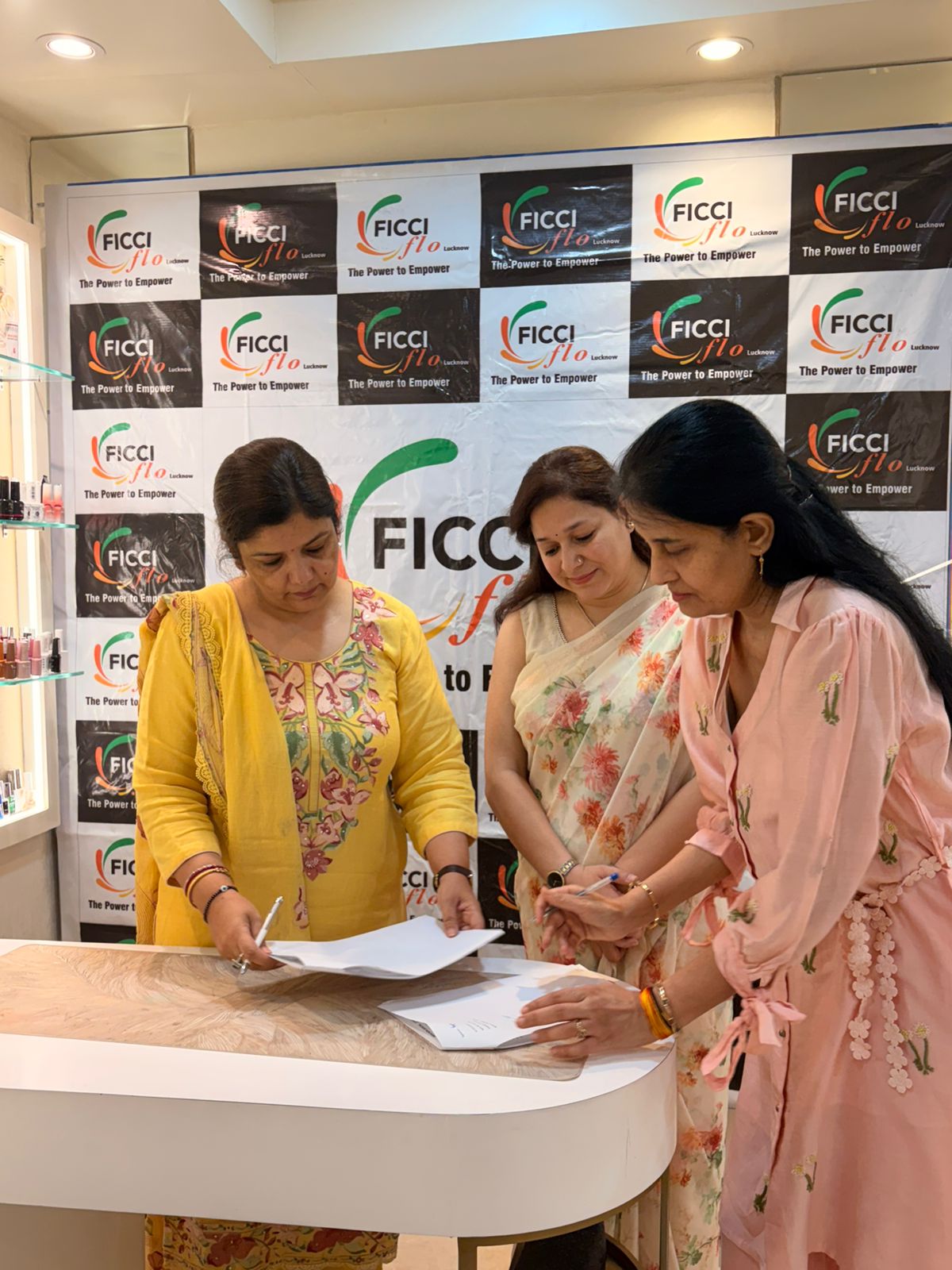
On 23rd April 2026, at the Trashury Office in Lucknow, FLO Lucknow formalised a partnership that brings together two seemingly distant worlds — waste and weaving — into a single, cohesive system of value creation. Trashury, founded by Pooja Sanwal, operates at an unusual intersection: sustainability and design.
The enterprise works specifically with non-recyclable single-use plastic — the category of waste that most formal systems cannot process — and transforms it into handcrafted, market-ready products through traditional handloom techniques. The result is not simply waste diversion. It is value addition, both environmental and economic, achieved through a process that honours craft while confronting a contemporary crisis.
What distinguishes the Trashury model is its “Closing the Loop” philosophy. Customers are encouraged to return used products for continuous repurposing — creating a closed-cycle system where consumption does not end in disposal, but feeds back into production.
Accountability is introduced at the user level; continuity is built into the system itself. It is a combination that grassroots sustainability efforts rarely achieve. The objective of this collaboration is to bring this model into a structured institutional framework. FLO Lucknow contributes access, visibility, and network-driven amplification; Trashury brings on-ground expertise in production, artisan training, and community engagement.
The MOU marks FLO Lucknow’s entry into a more design-driven, product-based circular economy engagement. Women artisans are not positioned as beneficiaries in this model — they are its creators. Plastic waste becomes a raw material; traditional weaving becomes the medium through which sustainability is made tangible and marketable.
Through this collaboration, FLO Lucknow will extend Trashury’s model from production into broader participation. Member networks, housing societies, and institutional platforms will be mobilised to create awareness, enable collection, and drive adoption at scale.
Key Takeaways
- FICCI FLO Lucknow partnered with Trashury to operationalise a design-led circular economy model in Lucknow.
- Non-recyclable single-use plastic — typically outside formal recycling systems — is the core raw material.
- Traditional handloom techniques are integrated with modern sustainability practices to create market-ready products
- Women artisans are positioned as creators within the circular value chain, not as passive beneficiaries.
- Trashury’s “Closing the Loop” philosophy builds user-level accountability into the consumption cycle.
- The collaboration bridges environmental sustainability directly with dignified livelihood generation.
- FLO Lucknow’s institutional network will amplify adoption across housing societies and member platforms.
- Model demonstrates that design and sustainability are not competing priorities — they are complementary ones.
- This partnership shifts the circular economy conversation from theory to tangible, trackable practice.
- A replicable framework emerges — one that other FLO chapters can adapt for their own cities and contexts.
Impact
The signing of this MOU signals something more than a new partnership — it reflects a shift in thinking. From linear consumption to circular design. From waste management to resource creation. From isolated environmental effort to collaborative, institutional momentum. The aim is not simply to support what Trashury has built, but to multiply its reach across communities that FLO is uniquely positioned to access.