
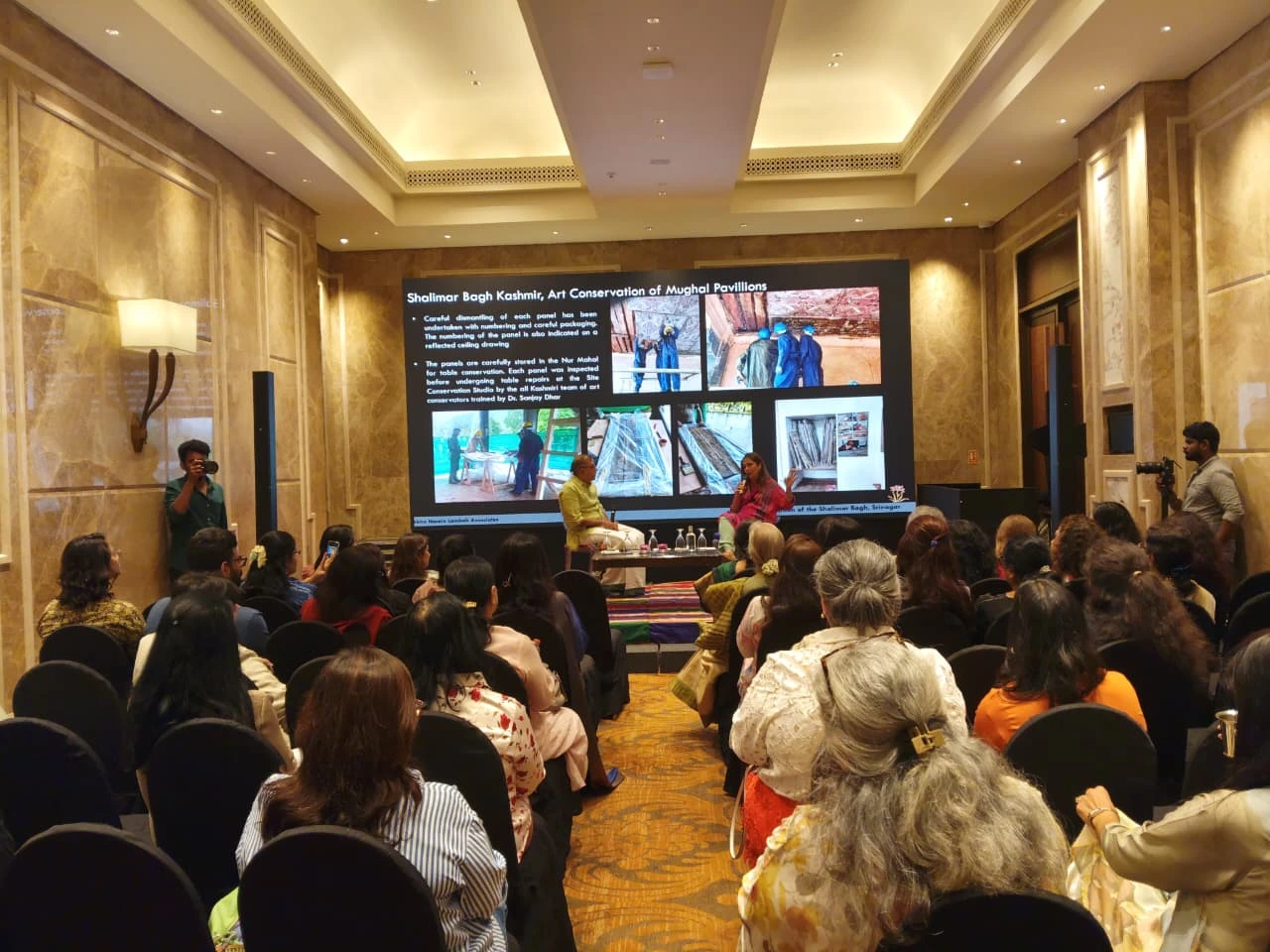
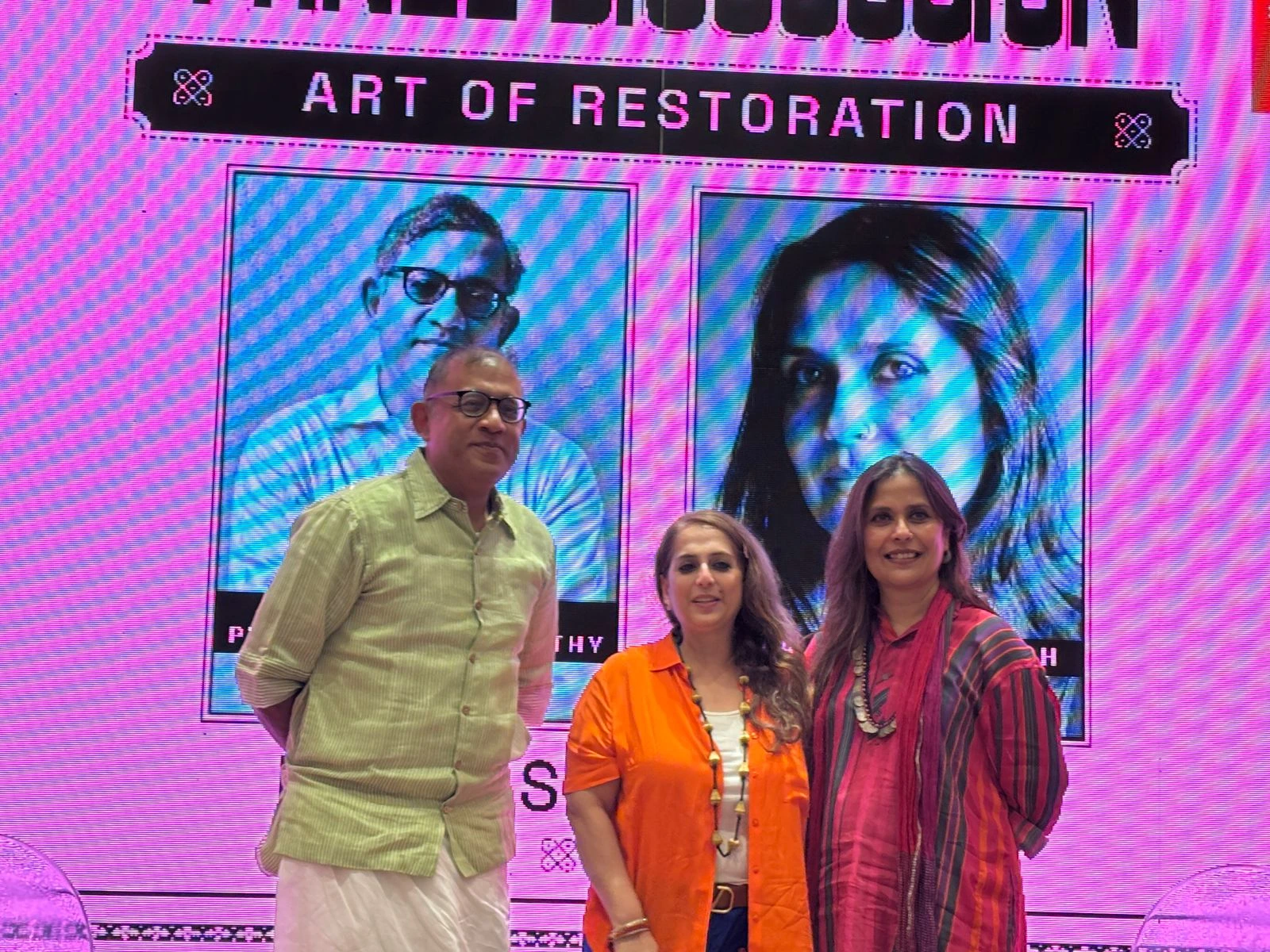
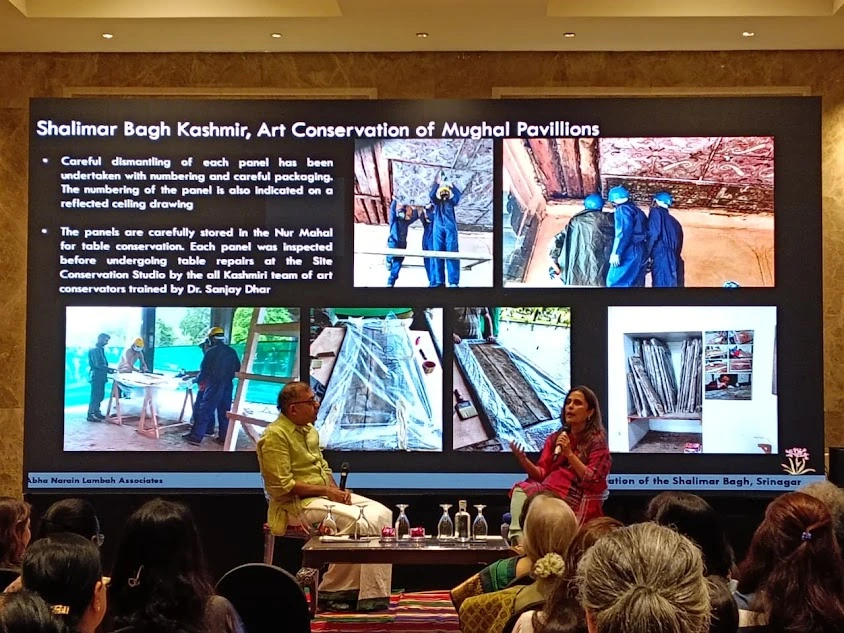
FLO Chennai, under the leadership of Chairperson Ms. Niyati A. Mehta, organized a panel discussion, “The Art Of Restoration,” a part of a thoughtfully curated session at Madras Art Week. Held at Taj Coromandal, this panel discussion was at the intersection of history, architecture, and social responsibility.
The session featured Mr. Pradeep Chakravarthy in conversation with Ms. Abha Narain Lambah, a conservation architect whose work focuses on understanding and preserving India’s rich architectural heritage.
The discussion traced Ms. Abha’s journey into the field of conservation—what drew her to this path, the challenges she encountered over the years, and the evolving philosophy that guides her work today. Through anecdotes and real-world examples, she highlighted how conservation is not merely about restoring old structures, but about thoughtfully integrating heritage into contemporary life.
One particularly engaging segment of the conversation focused on urban contexts such as Bombay, where the pressure for housing, infrastructure, and improved quality of life must be balanced with the need to protect historical architecture. The dialogue raised important questions around sustainable development—how cities can grow without erasing their cultural memory, and how restoration can coexist with modern urban needs.
The session was well moderated and highly engaging, encouraging reflection rather than prescribing solutions. Ms. Abha’s insights brought a strong research-driven perspective to the conversation, while also serving as an inspiring example of women working in niche, traditionally underrepresented fields and achieving meaningful impact.
Overall, the discussion resonated strongly with FICCI FLO’s mission of broadening horizons, fostering intellectual curiosity, and spotlighting women who are quietly doing transformative work. Around 27 attendees witnessed this panel talk about restoration.
It was an enriching exchange that left the audience with a deeper appreciation for conservation—not just as preservation of the past, but as a vital contributor to shaping a more thoughtful and inclusive future.