
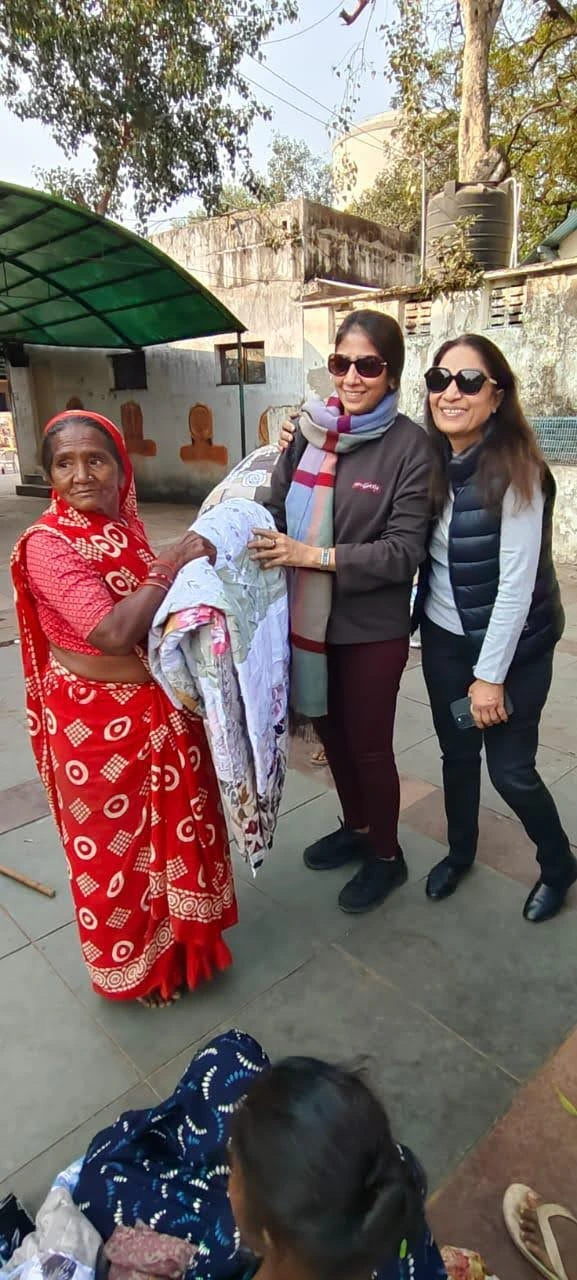
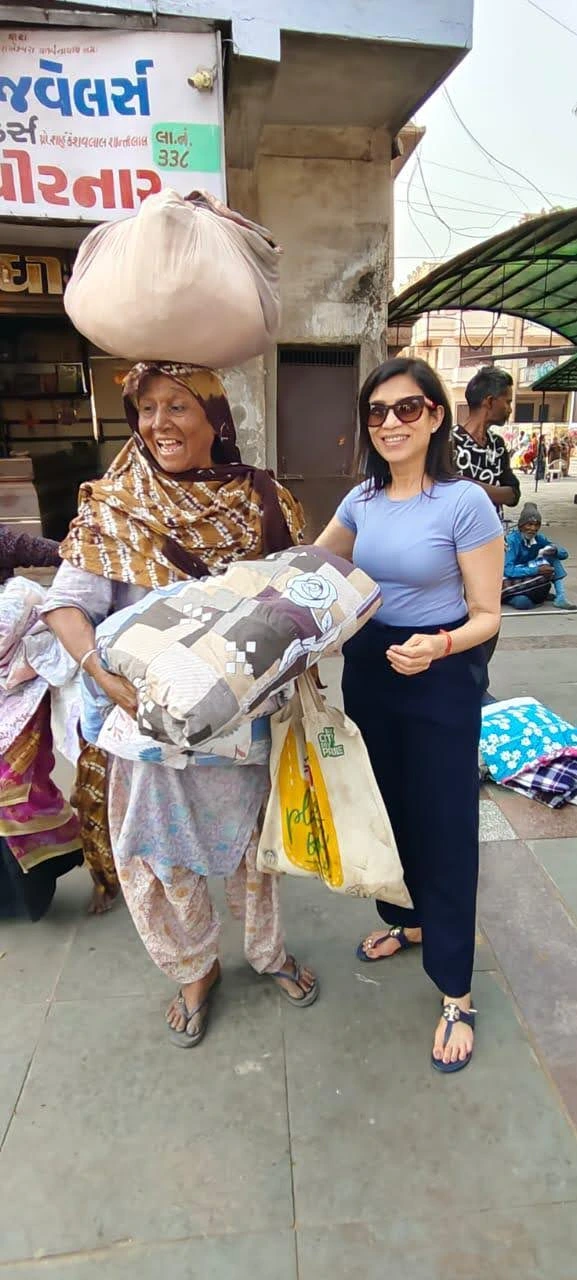
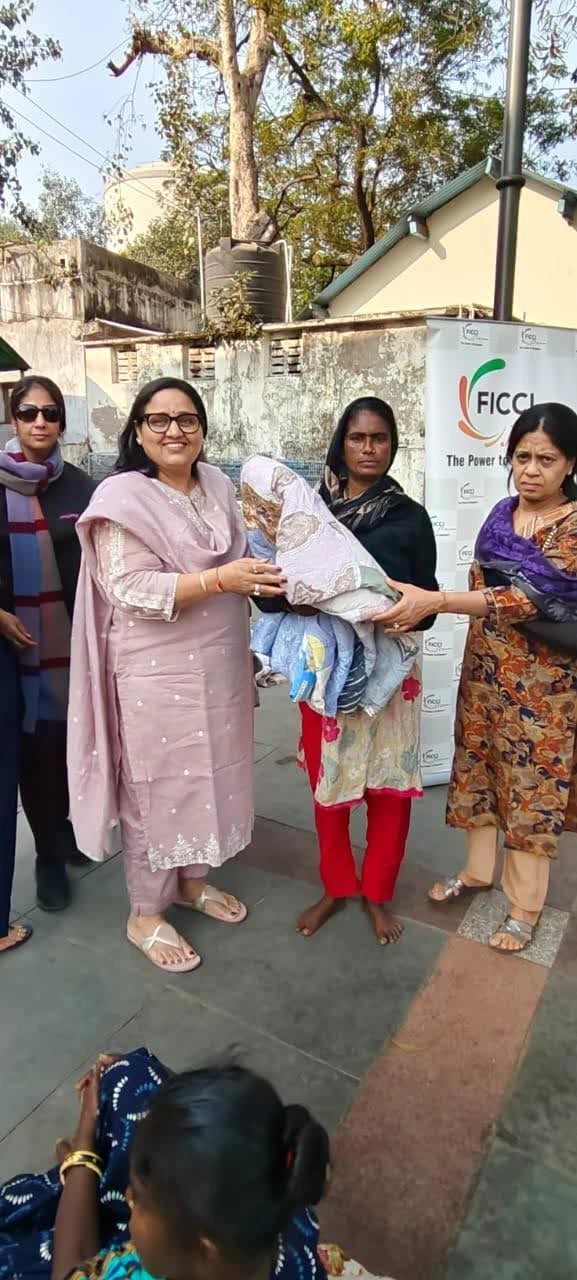
FLO Ahmedabad, under the leadership of Chairperson Madhu Banthia, distributed blankets to underprivileged women and other individuals. Around 800+ women engaged in blanket production, and the blankets were donated to 100 women. Total lives impacted: 2,000 individuals.
Objectives
- To promote sustainability by repurposing textile waste that would otherwise go to landfills into handcrafted blankets.
- To create sustainable livelihood opportunities for women by training them in sewing and garment-making skills.
- To enable women to earn for themselves and their families by producing blankets purchased by FLO members and their families for community distribution.
- To provide warmth and comfort to people living on pavements and in underprivileged communities during cold winter nights, with blankets that can also be used as mattresses during summer months.
Implementation
- Textile waste fabric was collected and converted into usable material for blanket-making.
- Women were trained in sewing and blanket production as part of FLO Ahmedabad’s skilling initiatives.
- Blankets produced were purchased by FLO members and their families.
- Direct distribution was carried out in areas around major temples where pavement dwellers reside.
Impact
- Over 800 blankets provided warmth and comfort to people sleeping in open and pavement areas during winter.
- Approximately 100 women earned a livelihood through skill-based textile work, strengthening household income and stability.
- When a woman earns, her entire family benefits—resulting in a cumulative social impact of approximately 2,000 lives.
- The blankets continue to offer value beyond winter, as they can be reused as mattresses during the hot summer months.
- The initiative successfully combined sustainability, livelihood creation, and community welfare in one integrated model.
Conclusion
The Blanket Distribution initiative exemplifies FLO Ahmedabad’s holistic and inclusive approach to impact. By transforming textile waste into products of dignity, empowering women with sustainable livelihoods, and providing warmth and comfort to pavement dwellers, the initiative created meaningful social, economic, and environmental outcomes—benefiting approximately 2,000 lives.