
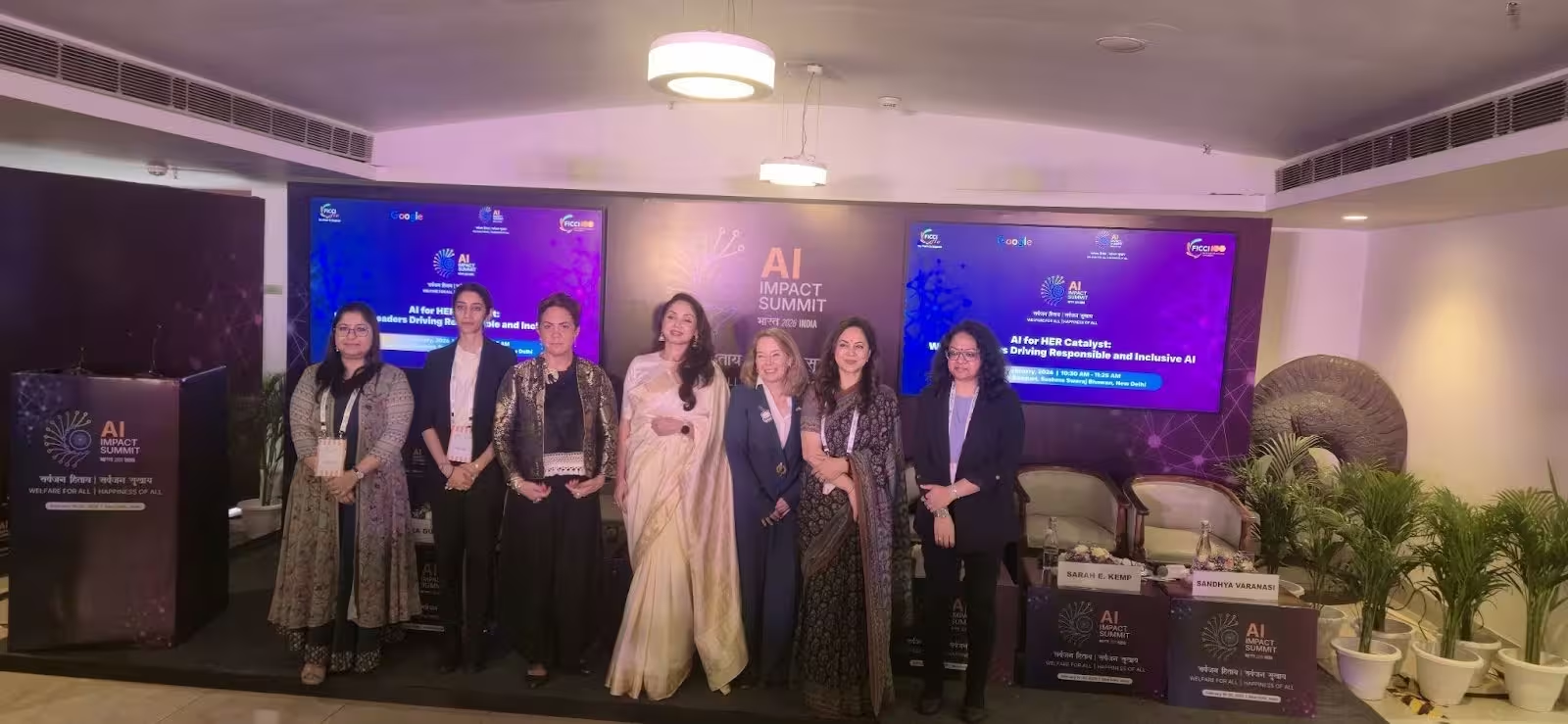
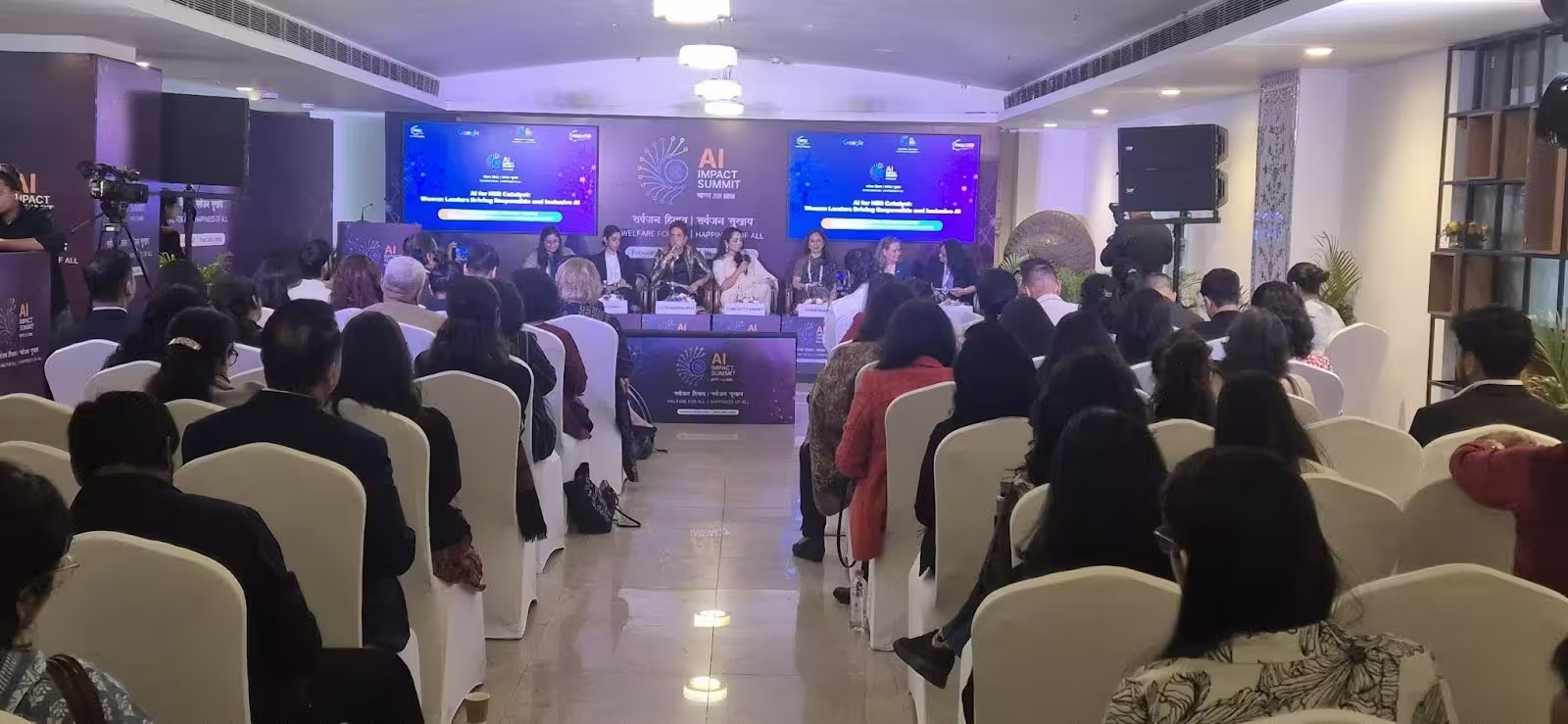
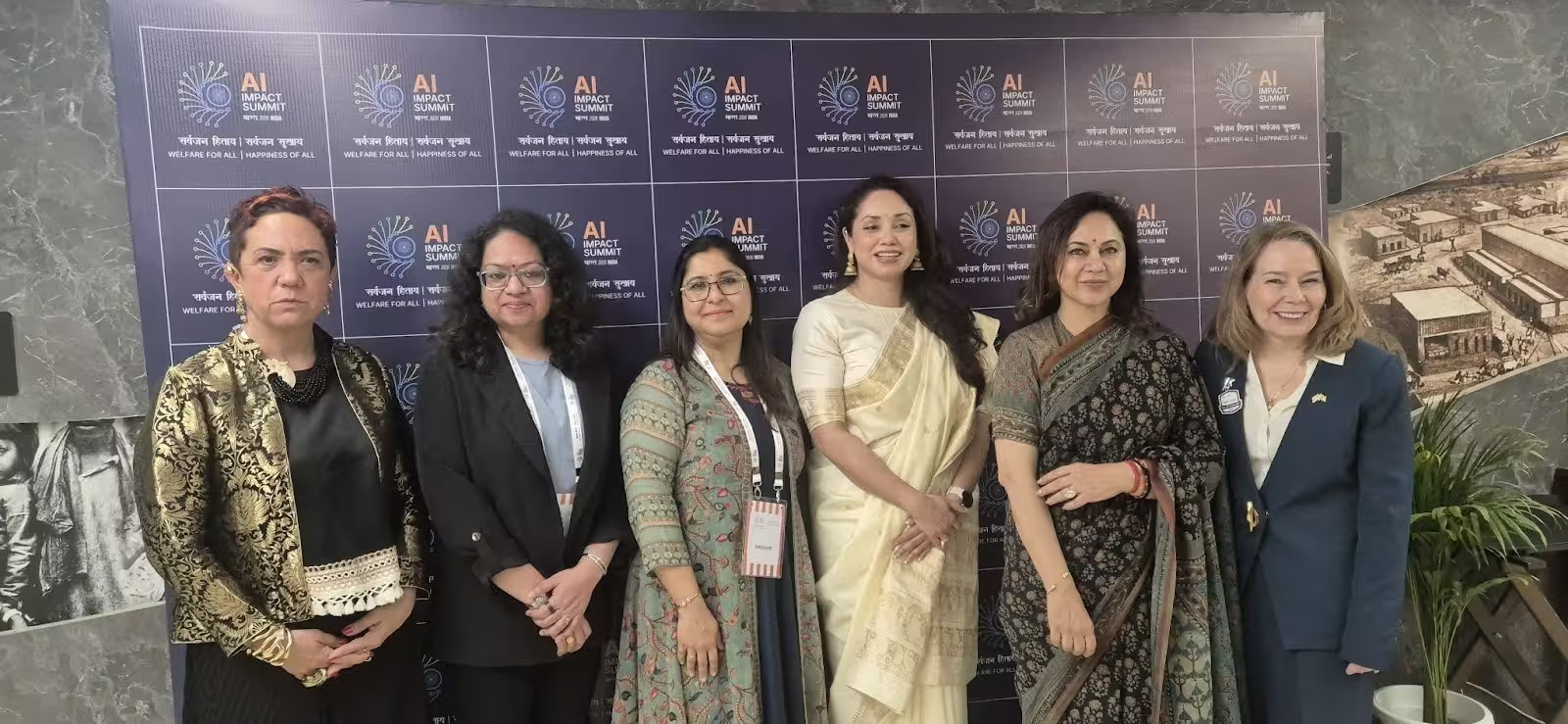
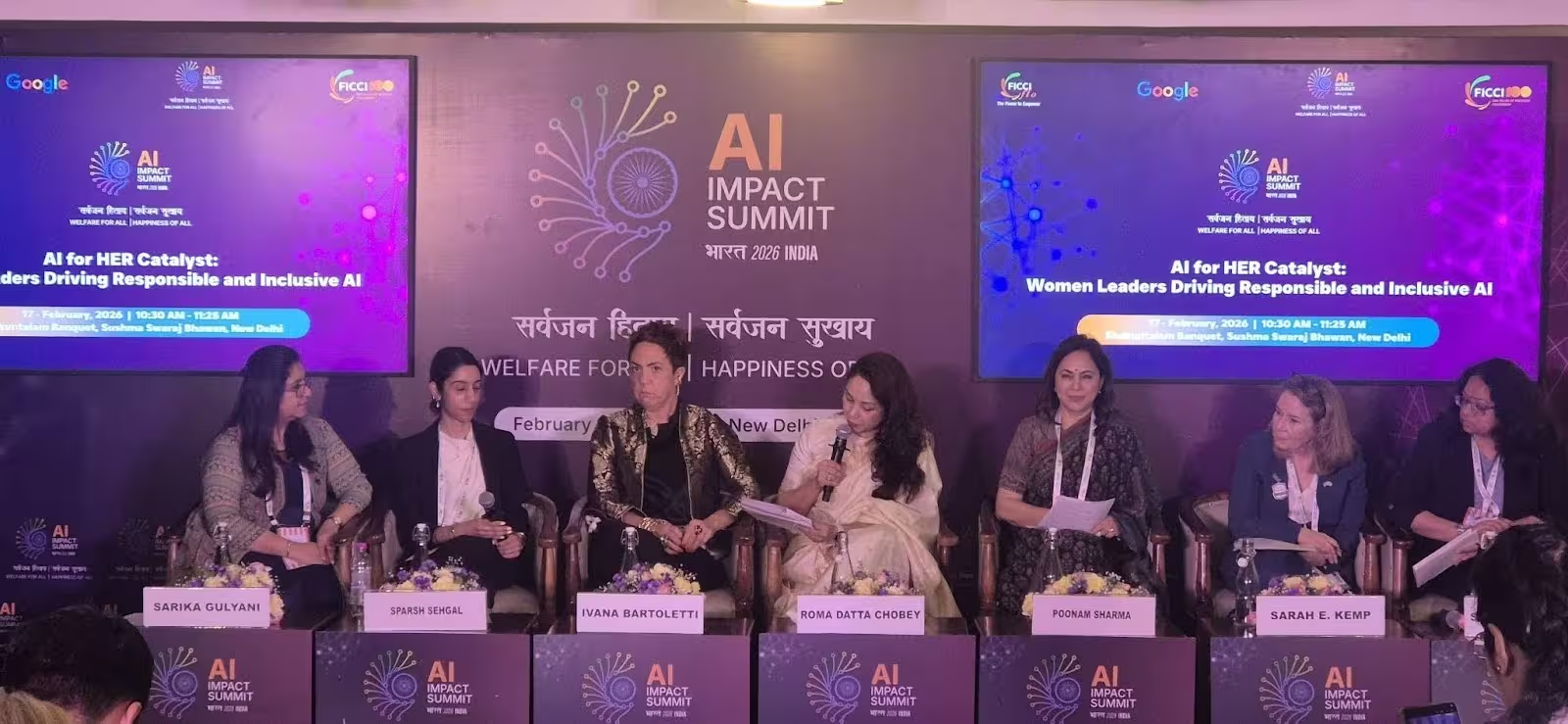
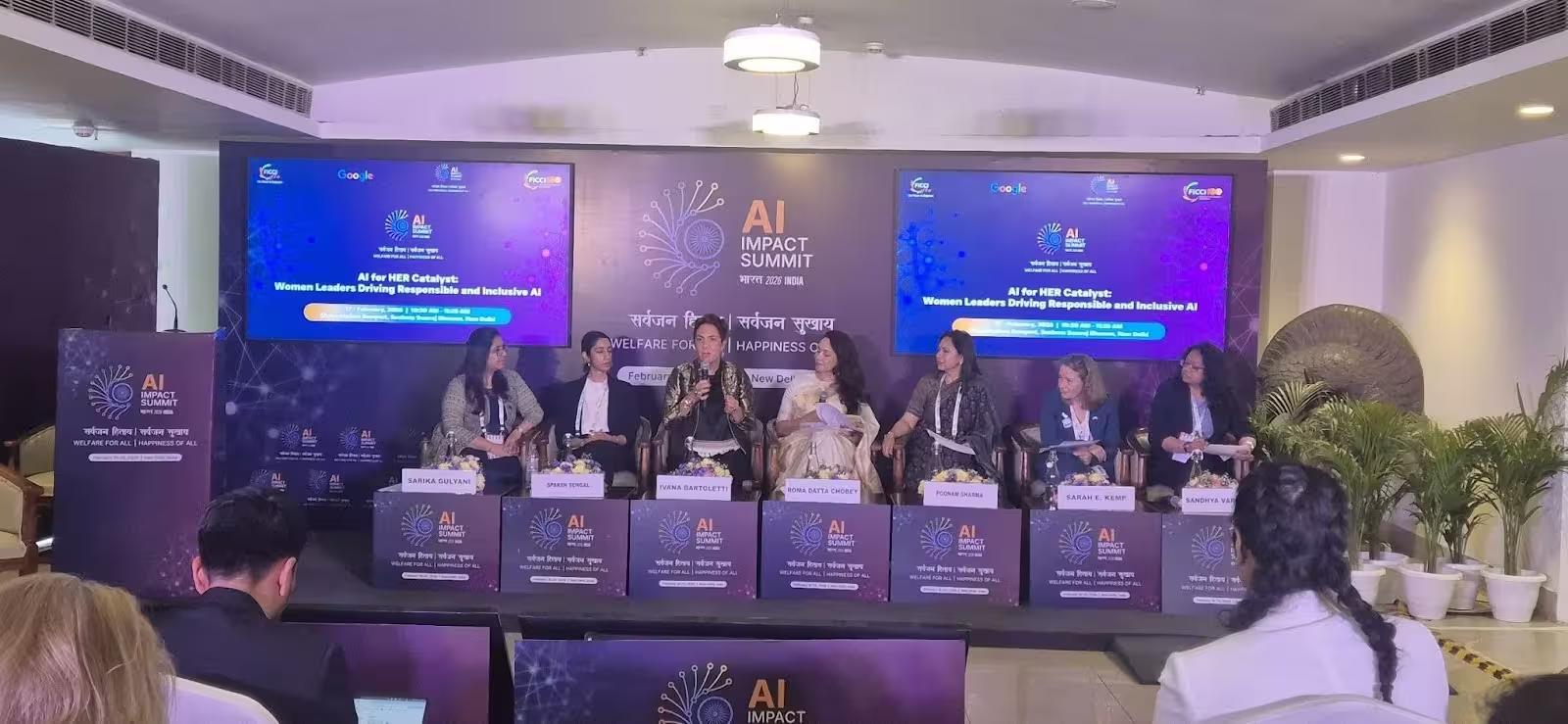
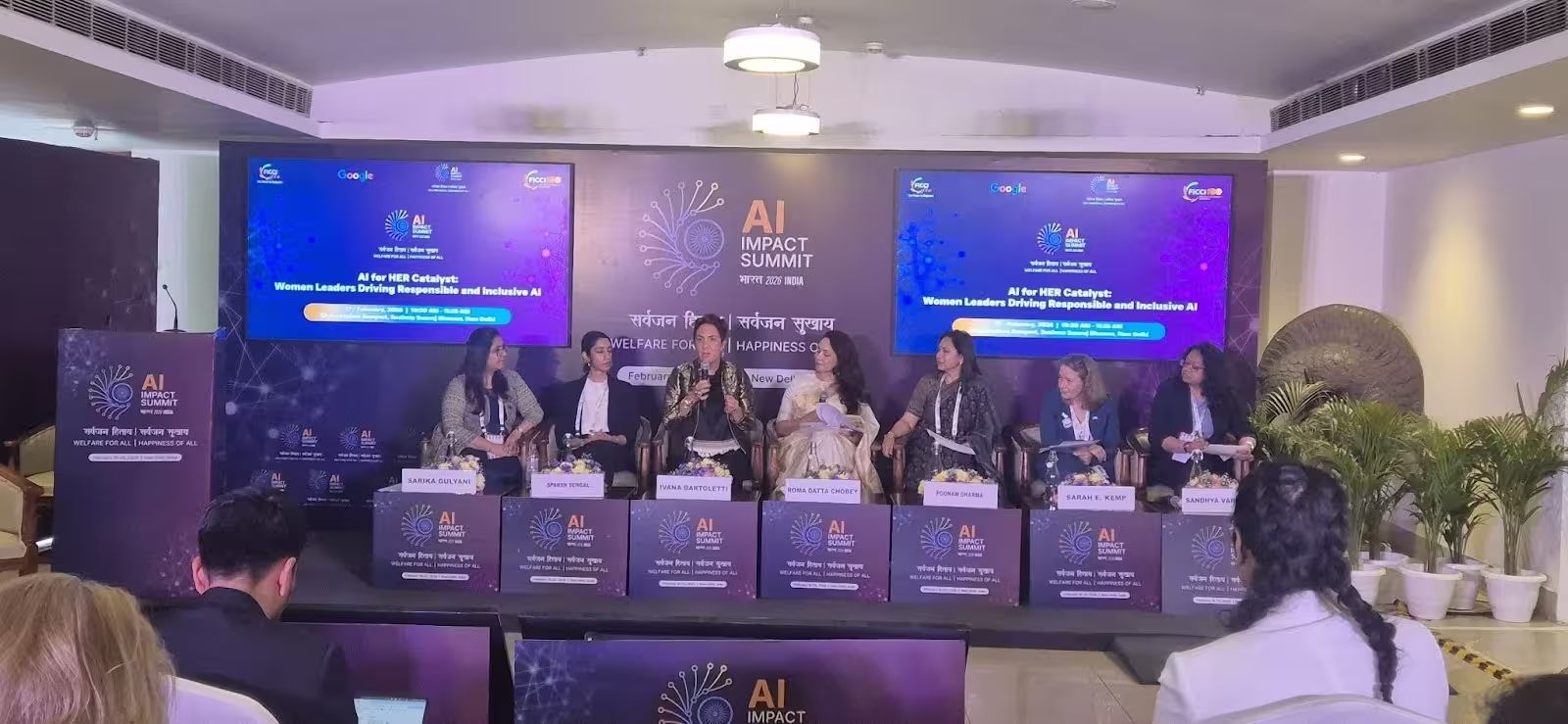
FICCI FLO, in collaboration with FICCI, hosted an insightful session titled “AI for HER: Catalyst Women Leaders Driving Responsible and Inclusive AI,” as a part of the ambitious India AI Impact Summit 2026, organized by the Government of India, based on the theme “Sarvajana Hitaya, Sarvajana Sukhaya” (welfare for all, happiness for all).
Held at Shakuntalam Banquet, Sushma Swaraj Bhawan, the session brought global technology leaders, policymakers, innovators, and AI enthusiasts together for a meaningful dialogue on building fair and equitable AI systems. Industry experts shared insights on boosting gender diversity in AI leadership and scaling AI solutions that are grounded in societal impact. The AI for HER session amplified voices that can influence organisational and national AI practices.
Panel Overview
The session featured a diverse panel of leaders from government, industry, and the AI ecosystem.
Moderator for session: Roma Datta Chobey, Managing Director, Google India.
Speakers
- Poonam Sharma, 42nd National President, FICCI FLO.
- Ivana Bartoletti – Chief Privacy Officer, Wipro Limited.
- Sarah E. Kemp – Vice President, International Government Affairs, Intel.
- Sandhya Varanasi – Vice President, India Hub CTO – Energy Management & Chair, India R&D Council, Schneider Electric.
- Sarika Gulyani, Senior Director at FICCI.
- Sparsh Sehgal – Chief Growth Officer, Sparsh CCTV.
The session was opened by Sarika Gulyani, Director at FICCI, who emphasized connecting national AI priorities with gender-balanced innovation leadership. Roma Datta Chobey, Managing Director of Google India, moderated the panel with clarity and insight; she guided the meaningful dialogue among leaders, focusing on gender bias mitigation and pathways for women in AI.
Special Address By FLO National President
42nd National President of FICCI FLO, Poonam Sharma, delivered a special address at the AI for HER session. She highlighted the growing AI adoption rate in India, which stands at 30%, surpassing the global average of 26%. Ms. Sharma said that AI technology is reshaping India’s economic and social landscape, but women are still underrepresented, occupying only about 22% of AI roles in India today. She emphasized women taking leadership roles in AI governance, model development, policy, and capital allocation to implement fair and responsible AI systems across the nation.
It can mitigate various risks for women, such as data privacy issues, algorithmic bias, deepfakes, cyber fraud, and online abuse. According to Poonam Sharma, “the future of AI will not be defined only by algorithms. It will be defined by leadership.”
FLO National President spotlighted how the organization has empowered women and young girls across India through its impactful initiatives and support of over 14,000 members across 21 chapters. Under her leadership, FICCI FLO has conducted various workshops and sessions to support women in grassroots entrepreneurship, digital skilling, and governance. The organization has conducted training sessions to equip women at the grassroots level with skills in AI, digital literacy, STEM, robotics, and entrepreneurship.
Ms. Poonam Sharma highlighted that FICCI FLO has placed AI at the centre of national programming. Initiatives like the AI India Conclave in Bangalore brought diverse participants together for exploring India-first AI systems, insights into building indigenous models, and creating a second brain with AI for research, writing, and strategic decision-making.
Thousands of women participated in sessions like AI-Powered Design Sprint with Canva, Build Your Instagram Content Calendar in 30 Minutes with AI, Cyber Safe, AI Smart: Your 2025 Scam Survival Guide, and Festive Magic with AI. In this way, FICCI FLO has achieved success in making women tech-savvy and future-ready.
Also, FICCI FLO has launched its Drone Sisters initiative to empower women at the grassroots level by making them certified drone pilots. The organization is continuously training Indian women in the Border Security Force (BSF) in order to make them crucial players in Viksit Bharat 2047.
Poonam Sharma applauded the Government of India’s programs to make women AI and technology ready, such as the Namo Drone Didi Scheme, AI Sakhi, and Digital Agriculture Mission (DAM). Initiatives like AI Sakhi, an AI-powered expert system, have supported women and healthcare workers from underserved communities to learn about using AI for daily tasks, navigate the internet with confidence, and understand digital protection.
According to Ms. Sharma, technology has played an important role in promoting equality by transforming rural areas into digitally powered communities. Now, AI technology is improving financial services, healthcare (early disease detection), agriculture (yield improvement), education, manufacturing, and economic opportunities for people living in rural areas in India. Also, Information and Communications Technology (ICT) is transforming the lives of marginalized communities in India through social inclusion and digital literacy.
Key Themes Explored At The AI For Her Session
Industry pioneers shared insights on how to shape ethical, inclusive, and socially impactful AI systems. The panel discussion broadly focused on the following themes:
- Building Responsible, Fair & Ethical AI Systems
The discussion started with a focus on the development and deployment of AI systems in responsible, fair, and ethical ways. This approach ensures AI technology respects human values and rights.
Chief Privacy Officer at Wipro Limited, Ivana Bartoletti, highlighted that women are significantly underrepresented in artificial intelligence (AI) governance, policy, and leadership roles due to structural, cultural, and educational barriers.
Due to women’s underrepresentation in AI roles, limited data has been used to train generative AI models. According to Ms. Bartoletti, women leaders and innovators should come forward to train and govern AI systems to ensure fair governance and create inclusive AI policy. She underscored the importance of multi-sector collaboration and government-led initiatives for guiding safe, fair, and trusted AI adoption globally.
- Boosting Gender Diversity in AI Leadership
Panelists agreed that increasing gender diversity in AI leadership is crucial at this moment. It will bring diverse voices in AI governance and improve ethical decision-making. Organisations can reduce gender bias in both data and algorithmic processes to avoid generating unfair or discriminatory results using AI systems.
Chief Growth Officer at Sparsh CCTV, Sparsh Sehgal, highlighted the need to increase the number of women in the workforce to build, deploy, and govern AI systems across various sectors. Ms. Sehgal added that there is a greater representation of women at her own organization, and it is important for building an equitable and inclusive team. In this way, more women will get high-growth employment opportunities in the AI and tech sector.
- AI Transforming Daily Life And Productivity
AI systems have made people’s lives easier by streamlining different tasks in personal and professional lives, from mapping routes to filtering emails. According to FLO National President, Poonam Sharma, AI is an empowerment tool in transforming life, amplifying human creativity, and fueling economic growth in India.
For transforming daily life and boosting productivity at work, AI systems are useful to automate repetitive tasks, flag suspicious transactions, simplify replies, manage schedules, brainstorm ideas, suggest optimal routes, and deliver personalized recommendations.
- Capital Access for Women-Led AI Innovations
Women founders and innovators often face difficulties in receiving capital and ecosystem support for their AI and tech-based startups due to the lack of women leaders and mentors in this space.
Currently working as Vice President, International Government Affairs at Intel, Sarah E. Kemp highlighted that venture capital, grants, and targeted investment programs are crucial to scale women-led AI solutions working on solving real-world problems. Also, it will boost women’s participation and reduce bias in the AI startup ecosystem.
- AI-Powered Product Design
The session emphasized that AI is useful in the research and development (R & D) process for designing a product. Working as the VP & CTO for the India Hub in Energy Management at Schneider Electric, Sandhya Varanasi explained that innovation includes using AI technology to build safer, reliable, and next-generation-ready products in different sectors such as energy, healthcare, education, and technology.
According to Ms. Varanasi, AI systems can be used for streamlining workflows and automating tasks for product research & development at different stages.
Overall Impact & Outcome
Attendees benefited from the AI for HER session, hosted by FICCI and FICCI FLO, as it provided them with practical insights on creating secure and trusted AI systems while nurturing future women technologists. It underscored the value of women’s perspectives in shaping AI policy, governance, and ethics. Inclusive AI leadership can improve technological and societal outcomes on a large scale.
This inspiring session ended with Sarika Gulyani delivering the vote of thanks, expressing gratitude to the panelists and attendees. Also, it reinforced the vision behind India AI Impact Summit 2026: being a trusted partner in global AI development, committed to “AI for All”, inclusive deployment, and human-centric innovation.